Inside the Poddolls Worktable: How a Seed Pod Becomes a Character
-
- Post Date: 17 Jul, 2026

PODDOLLS STUDIO NOTES
Inside the Poddolls Worktable: How a Seed Pod Becomes a Character
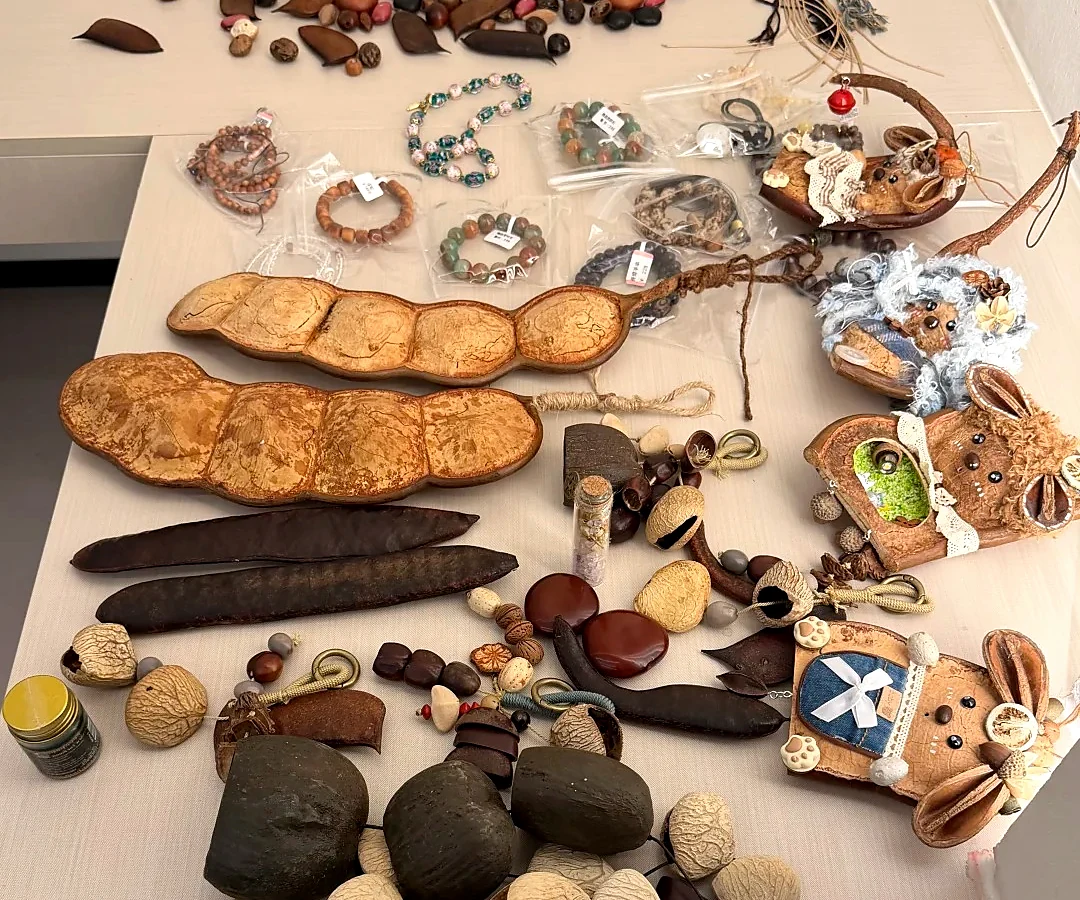
At first glance, the Poddolls worktable looks like someone emptied a very tiny forest onto it.
There are seed pod shells, scraps of fabric, loose curls of hair, acorn caps, bits of lace, unfinished faces, and finished characters waiting beside pieces that will probably never be used.
Nothing moves down a neat assembly line. That would be easier, but it would miss the point.
A separate studio note shows the front and back of the same Poddoll, including the finished details that are easy to miss in a front-facing photograph.
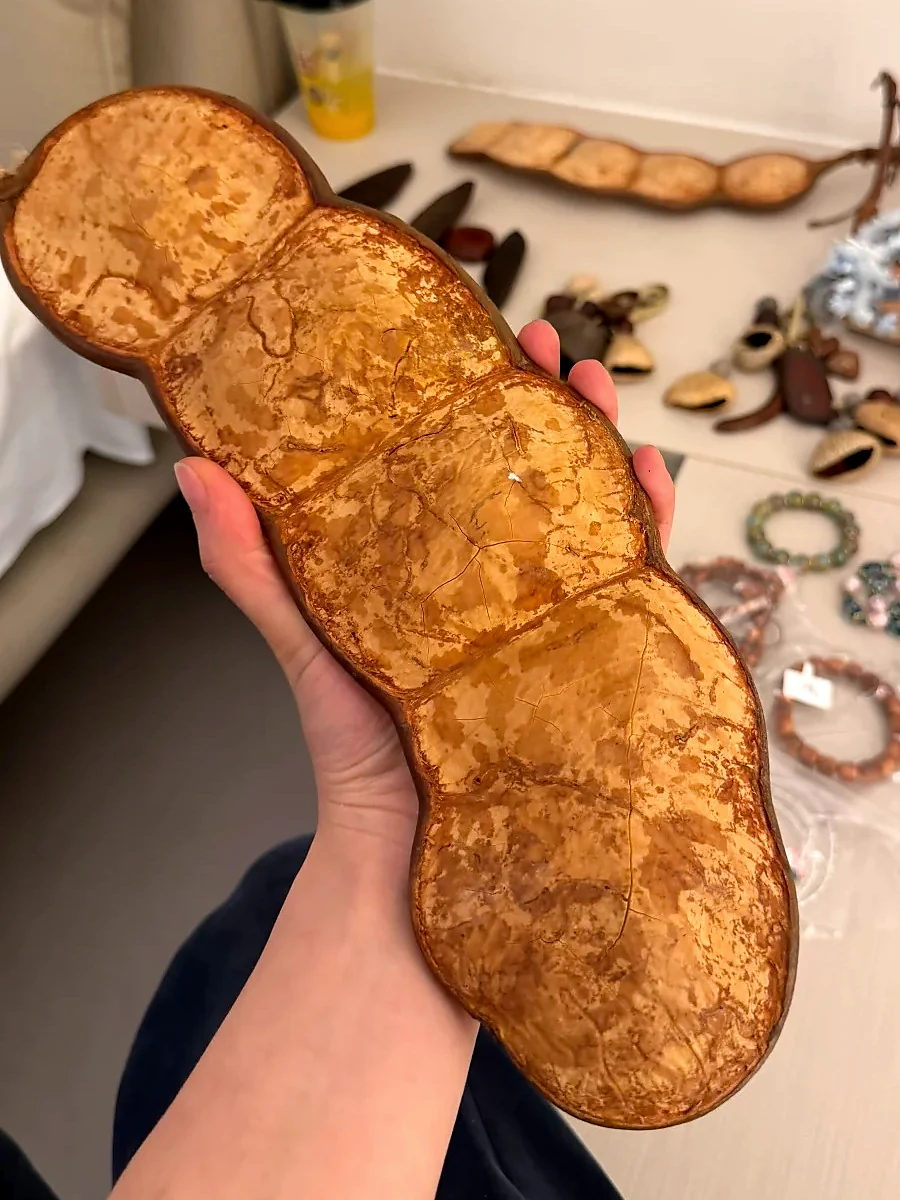
A Poddoll usually starts with the shell itself. Its curve, width, markings, and texture help decide what happens next.
Quick Answer
The Poddolls worktable is where treated natural seed pod shells are compared with fabrics, botanical pieces, hair, facial details, and small accessories.
Some choices work right away. Most do not. Pieces are moved, replaced, trimmed, or returned to their trays until the shell and the character feel like they belong together.
Key Facts
- Poddolls are made with real treated natural seed pod shells.
- No two natural shells have exactly the same shape or surface.
- Hair, clothing, faces, and small details are positioned by hand.
- Many materials tested on the table never reach the finished character.
- Poddolls are offered as finished collectible characters and DIY kits.
The Shell Gets the First Say
Before we choose a face, we look at the shell.
Some are wide near the top. Others lean slightly to one side. One may have a smooth center, while another has darker markings or fine surface lines that are too interesting to cover.
Those differences affect the design more than a sketch does.
A broad shell may suit a rounder face or heavier clothing. A narrow one may need fewer details. Sometimes a natural mark lands exactly where a cheek, eyebrow, or patch of hair might go.
The shell does not arrive as a blank craft shape. It already has a direction.
For a general botanical definition of a seed, see Wikipedia’s overview of a seed. The shells shown here are used as dried craft materials, not as planting material.
Most Materials Are Auditioning
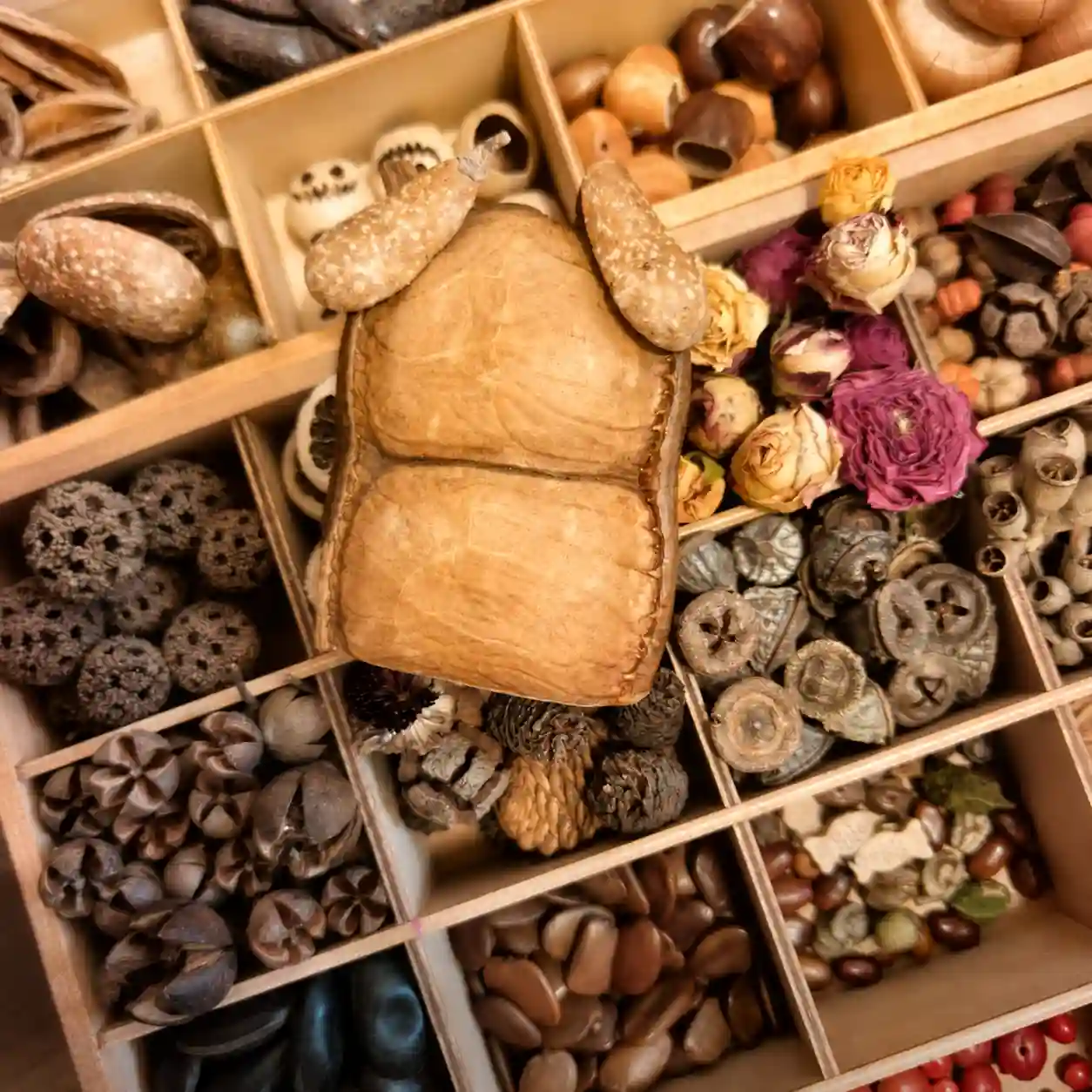
The wooden trays around the worktable hold plenty of possible details: dried botanical pieces, seeds, fabric, lace, tiny decorations, and parts prepared for earlier ideas.
Possible is the important word.
A flower can look tiny in a tray and enormous on a Poddoll. A bow may be the right color but make the top of the character feel too heavy. A piece of fabric can work beautifully until it covers the best part of the shell.
So the details get tested directly against the body.
Some stay. Some move from a hat to a pocket. Some go straight back into the tray without taking it personally.
The Awkward In-Between Stage
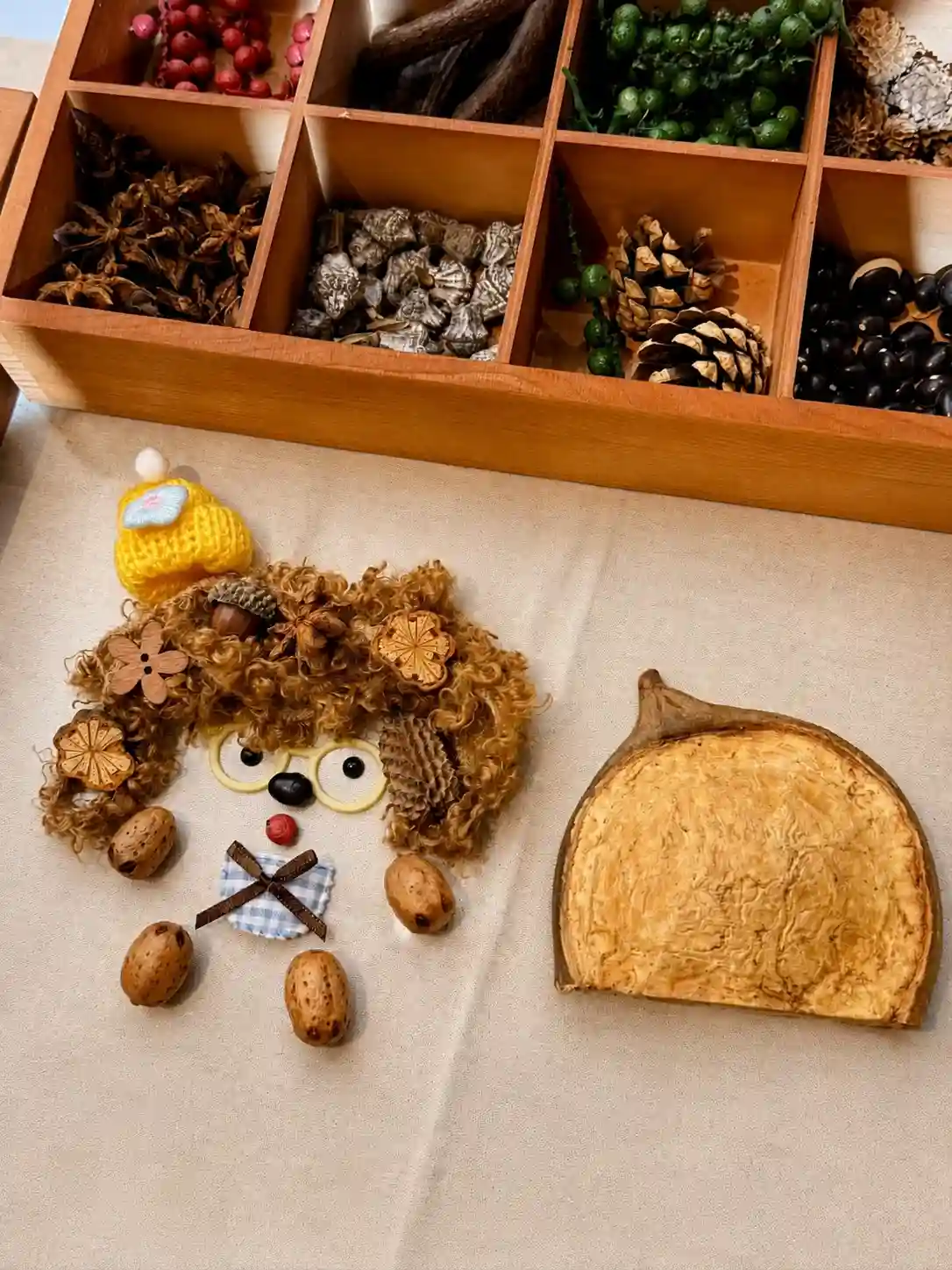
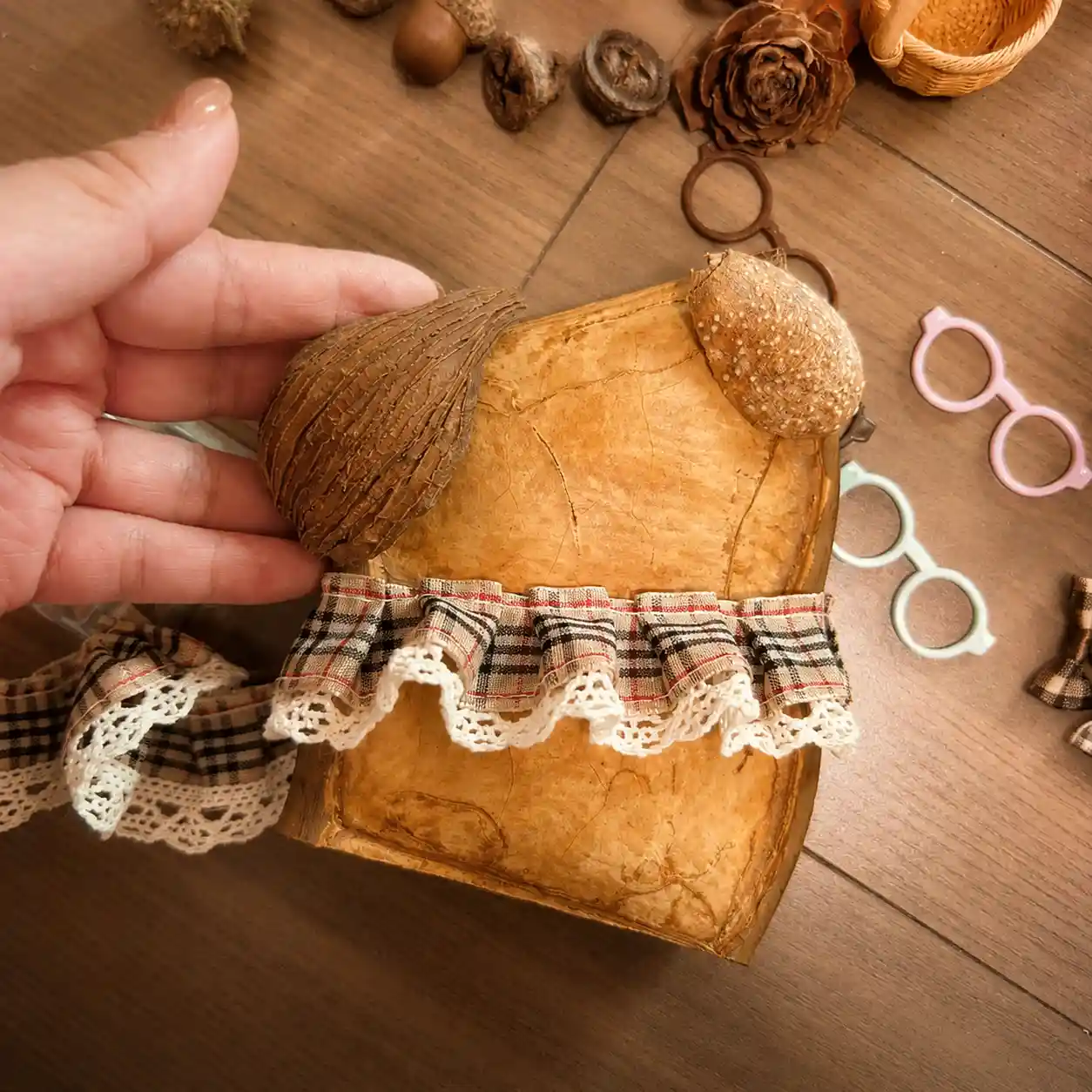
Before a Poddoll looks like a character, it looks like a small pile of unrelated decisions.
The hair is loose. The eyes are waiting nearby. Fabric has been cut but not fixed. Feet, ears, arms, and decorations may still be lined up beside the shell.
It is not the prettiest stage, but it is one of the most useful to see.
A finished photo hides all the versions that almost worked. The worktable keeps the evidence: the larger nose that changed the expression, the fabric that made the body look too short, or the decorative piece that distracted from the face.
The character appears slowly, one adjustment at a time.
A Few Millimeters Can Change the Face
Small characters are unforgiving about placement.
Move the eyes slightly closer and the expression changes. Raise a strip of fabric and the body looks shorter. Turn an ear outward and the character suddenly seems more alert.
Hair often needs less volume than expected. Glasses may look perfect on their own but hide too much shell texture. A tiny decoration can pull attention away from everything else.
Most of these choices are made while holding the shell in one hand and trying pieces with the other.
They are not dramatic moments. They are simply where the personality shows up.
A separate studio note looks at how a handmade open-mouth structure appears across cats, pigs, hanging faces, and more person-like characters.
Older studio photographs also show how cat-style hangers, animal-inspired figures, and human-like details were tested across different natural shell shapes.
Same Table, Different Characters
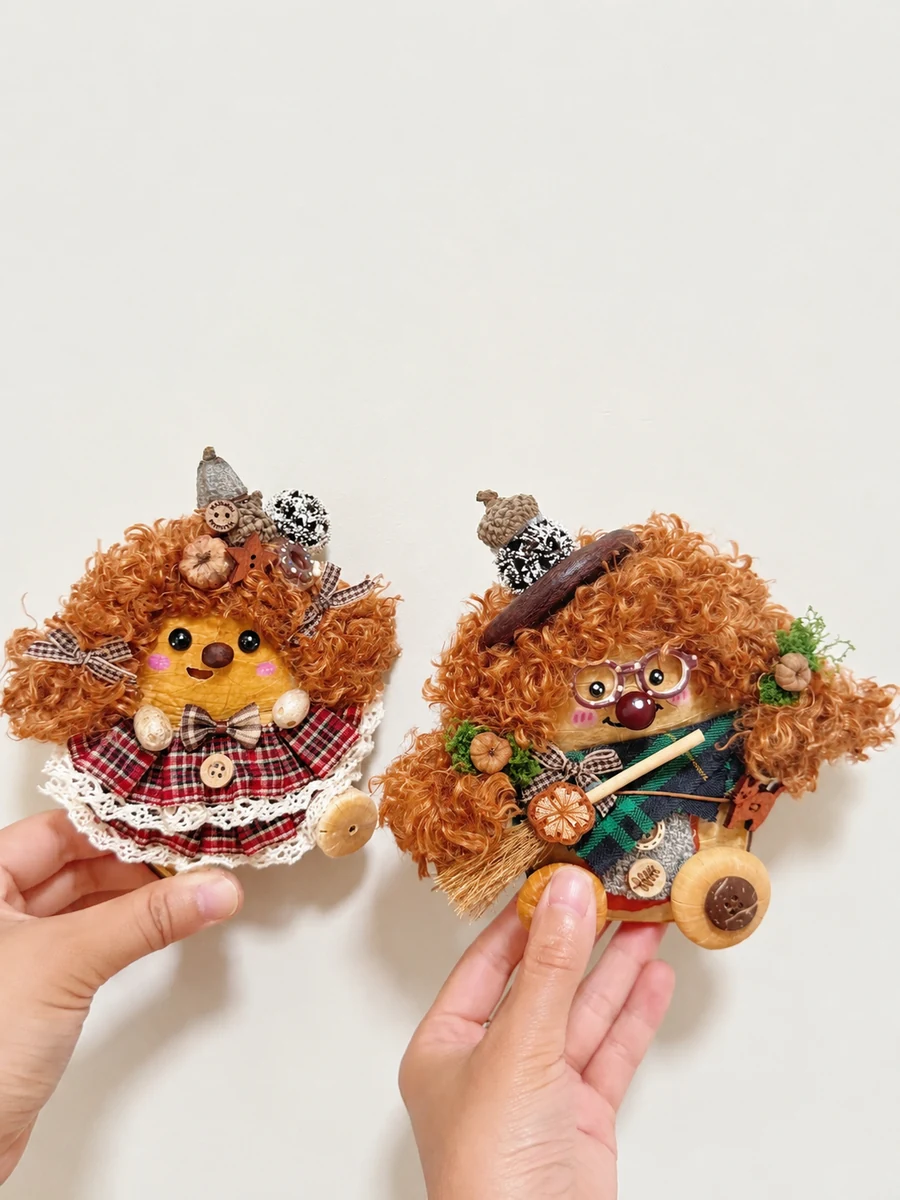
Two Poddolls can use similar fabrics, colors, or botanical details and still end up looking unrelated.
The shells started in different places.
One may curve forward. Another may be flatter. One has visible lines across the surface, while the other has a wide, quiet center that leaves more room for clothing or facial details.
The design responds to those differences instead of hiding them.
That is why the finished characters feel related without looking copied.
What Leaves the Worktable
Once the loose materials are cleared away, the process looks much tidier than it felt.
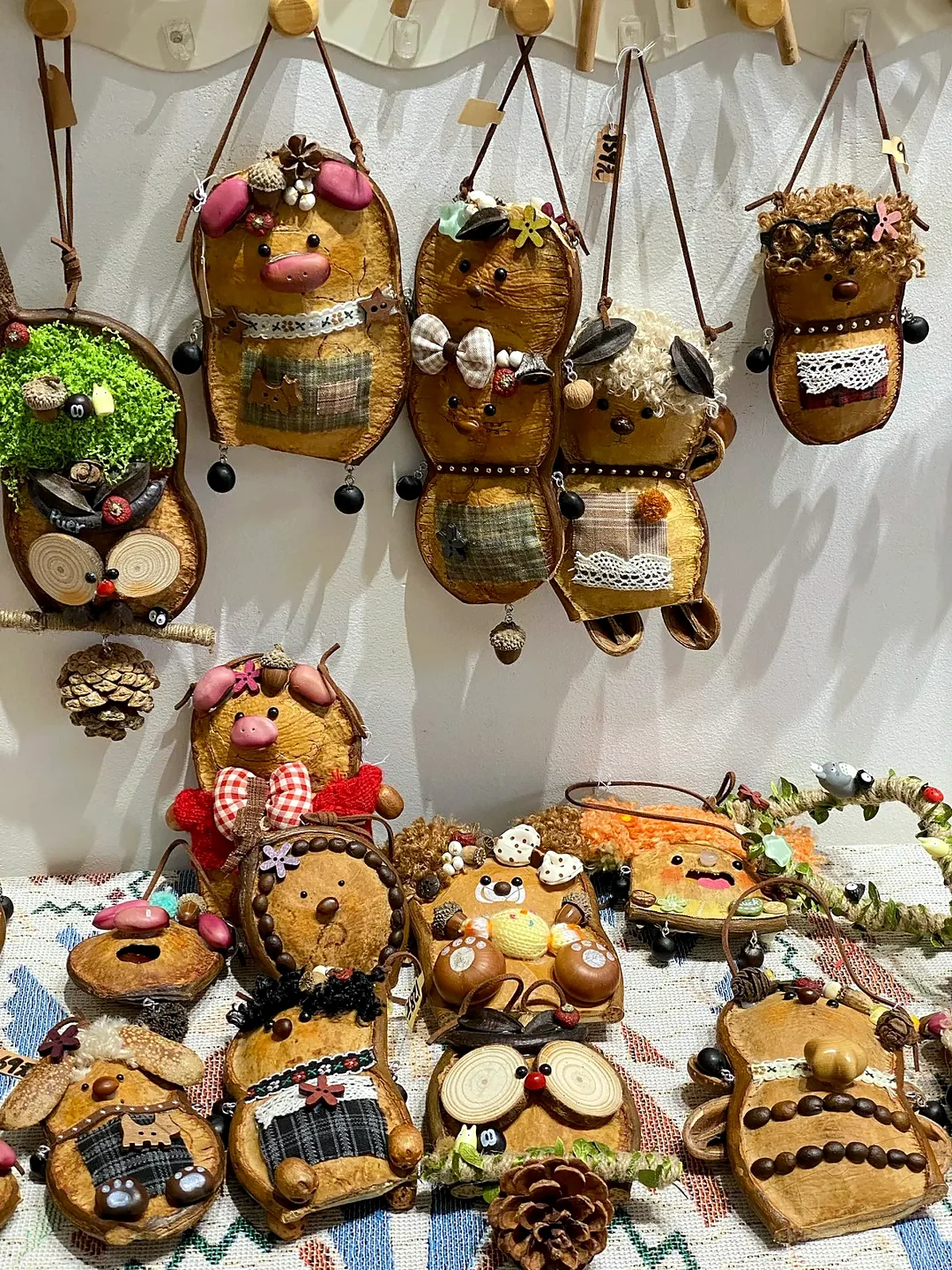
Unused pieces return to their trays. Fabric scraps disappear. The different versions of a face are no longer visible. What remains is a group of finished characters with different shapes, expressions, clothes, and ways of sitting or hanging.
Some look like animals. Some feel more like small woodland people. A few are difficult to classify, which is often the fun part.
They came through the same studio, but they did not leave with the same face.
Maker Notes
A few things the worktable keeps reminding us:
- The shell is usually the first thing we notice and the last thing we want to hide.
- A beautiful detail can still be wrong for the character.
- Adding more pieces rarely fixes an unbalanced design.
- Removing something can take longer than adding it.
- The final version often looks obvious only after several awkward ones.
From the Worktable to Your Space
Poddolls are available as finished handmade characters and as DIY kits for people who would rather make their own choices at the table.
Both begin with a real natural shell. Neither is expected to look factory-perfect.
Frequently Asked Questions
What happens on the Poddolls worktable?
Natural seed pod shells are compared with fabrics, hair, botanical pieces, facial details, and small accessories. Materials are tested and adjusted until the shell and the character work together.
Are Poddolls made from real seed pod shells?
Yes. Poddolls use treated natural seed pod shells. Their shape, color, texture, and markings naturally vary.
Does every shell become the same type of character?
No. The shell's proportions and surface influence the design, so similar materials can lead to very different finished characters.
Are all the materials shown on the worktable used?
No. Several pieces may be tested before the final details are chosen. Some are moved, trimmed, replaced, or returned to storage.
Why do Poddolls look different from one another?
The shells are naturally different, and the hair, clothing, faces, and accessories are positioned by hand rather than copied from one fixed template.
Can I make a Poddoll myself?
Yes. Poddolls offers DIY kits for people who want to assemble and personalize their own character. Finished Poddolls are also available.
About Poddolls
Poddolls is a handmade seed pod doll studio that creates small collectible characters from natural seed pod shells, offered as finished dolls and DIY kits.
The studio works with the natural differences between shells rather than trying to make every character look identical.
Learn more about Poddolls or explore the complete Pod Doll Guide.
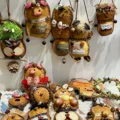
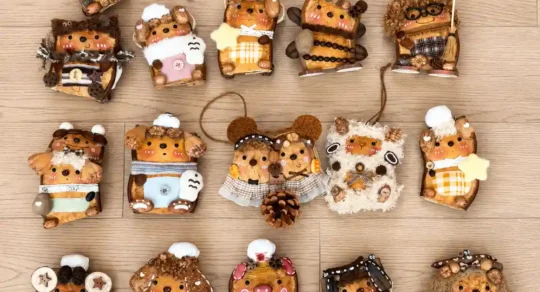
One Shelf Spot. 23 Poddolls. Who Gets It?
PODDOLLS STUDIO NOTESOne Shelf Spot. 23 Poddolls. Who Gets It?Pick one from the group photo before the close-ups make the decision harder.For this photo …
-
- Post Date: 21 Jul, 2026
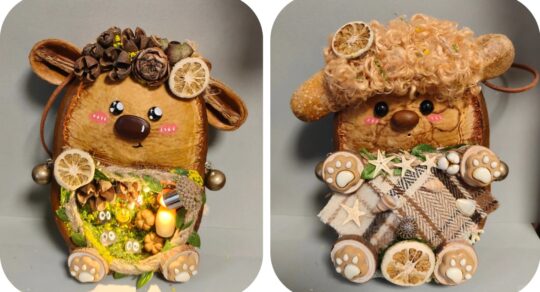
One Poddoll, Two Completely Different Sides
PODDOLLS STUDIO NOTES One Poddoll, Two Completely Different Sides …
-
- Post Date: 20 Jul, 2026
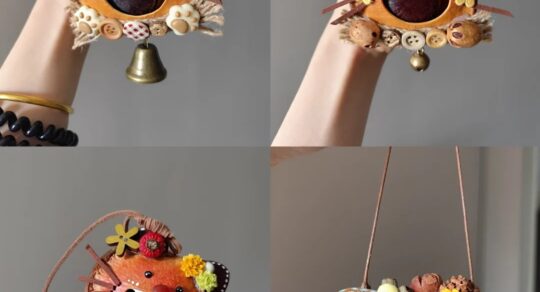
How One Open-Mouth Idea Became Cats, Pigs, and Something Else
PODDOLLS STUDIO NOTES How One Open-Mouth Idea Became Cats, Pigs, and Something Else Put these photos side by side and one detail keeps returning: a large, …
-
- Post Date: 19 Jul, 2026
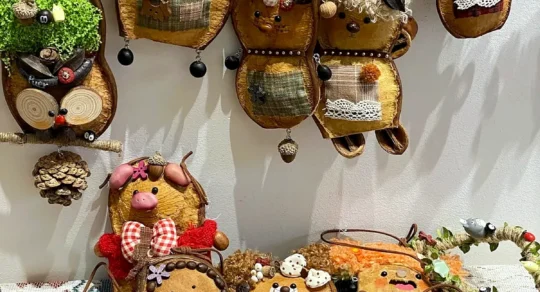
Before the Style Settled: Early Poddoll Experiments
PODDOLLS STUDIO ARCHIVEBefore the Style Settled: Early Poddoll ExperimentsCat-style hangers, animal faces, human-like outfits, and a few character ideas that never fit one category.These …
-
- Post Date: 18 Jul, 2026
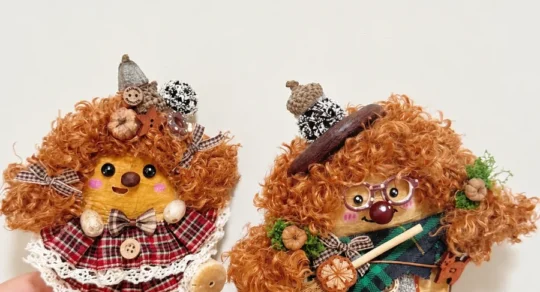
The Seed Pod Was Already Weird. We Just Gave It Hair.
PODDOLLS STUDIO NOTESThe Seed Pod Was Already Weird. We Just Gave It Hair.Seed pod character design starts on the worktable, where an undecorated shell …
-
- Post Date: 16 Jul, 2026
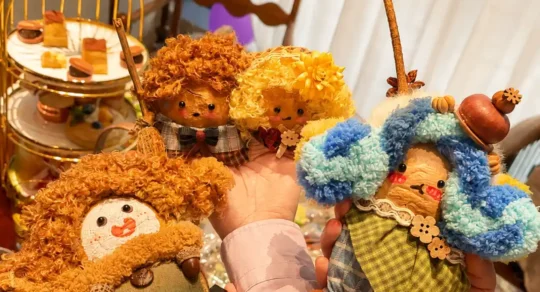
What Do You Give Someone Who Already Has Everything? 7 Gifts That Still Feel Personal
PODDOLLS GIFT GUIDEWhat Do You Give Someone Who Already Has Everything? 7 Gifts That Still Feel PersonalThey already own the good coffee …
-
- Post Date: 15 Jul, 2026