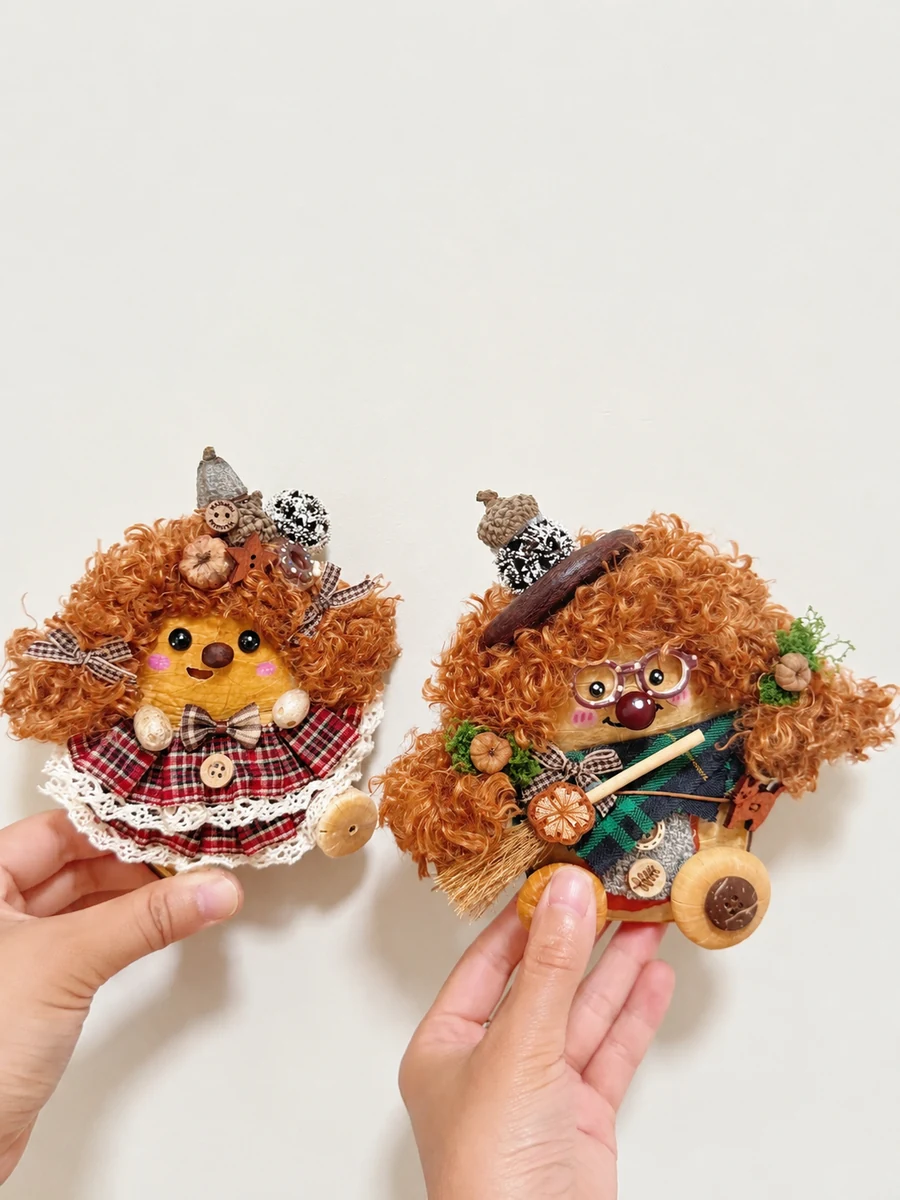
The Seed Pod Was Already Weird. We Just Gave It Hair.
-
- Post Date: 16 Jul, 2026

PODDOLLS STUDIO NOTES
The Seed Pod Was Already Weird. We Just Gave It Hair.
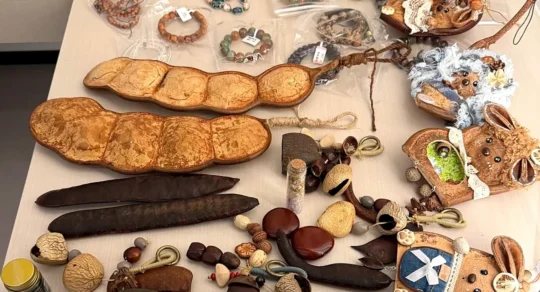
Seed pod character design starts on the worktable, where an undecorated shell appears to be doing almost nothing.
It is also already being difficult.
It leans in one direction. Its compartments are not perfectly even. One edge curves outward while another seems determined to become a shoulder, an ear, or a very confident hat. Before we add a face, fabric, or hair, the natural shell has already made several design decisions without asking us.
That is the part of Poddoll making that photographs of finished characters can hide. A Poddoll does not begin as a smooth, identical blank. It begins with a treated natural shell that already has a silhouette, surface, color, and set of limits.
Then the hair goes on, and everything becomes suspiciously personal.
For a broader look at the trays, loose parts, and small adjustments behind those decisions, visit the Poddolls worktable.
Quick Answer
A natural seed pod shell influences a handmade character before any face or outfit is added. Its curve affects the pose, its sections affect proportion, and its surface helps determine where hair, eyes, fabric, and small details can sit. Poddolls does not erase those differences. The studio works with them.
Hair is often the first addition that changes how the entire shape is read. A bare shell still looks like material. Add a soft outline around the top and suddenly the eye begins looking for a forehead, a face, and a personality.
Key Facts
- Poddolls uses treated natural seed pod shells as handmade craft materials.
- Natural shells can differ in curve, surface, color, compartment shape, and edge direction.
- The shell is not a standardized factory-made figurine base.
- Hair changes the overall silhouette before small facial details are added.
- Faces and clothing must be adjusted to the available shape rather than placed according to one fixed template.
- The photographs in this article show real studio materials and different real Poddolls, not one doll photographed at every stage.
- Poddolls is a modern handmade studio practice, not an ancient folk tradition.
Seed Pod Character Design Starts With the Shell
A blank canvas waits quietly for an idea. A natural shell arrives with opinions.
Look at two shells side by side and the difference is immediate. One may stand taller. Another may curve close to the table. The stem might point upward, sideways, or directly into the area where a perfectly sensible design planned to put a hat.
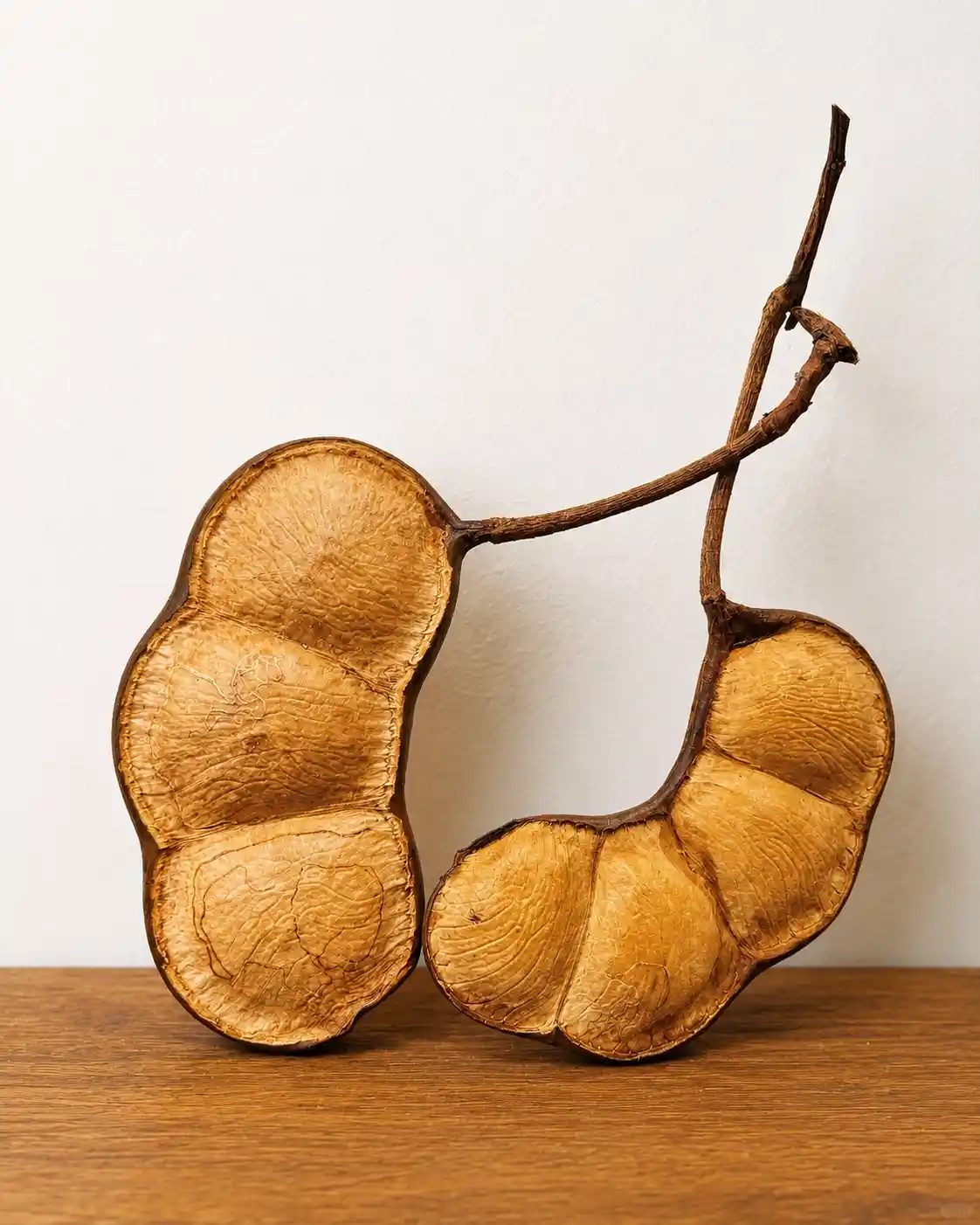
Neither shell volunteered to become a sensible rectangle.
That matters because character design begins with the outer shape. A tall shell may support a long face or an upright body. A wider section may suggest a rounder character. A deep opening may become part of an expressive mouth, while a flatter surface may suit a smaller and quieter expression.
These are possibilities, not rules. The shell does not contain a finished character waiting to be uncovered. It simply gives the maker a starting structure that cannot be treated as completely neutral.
For the wider natural story behind seed pods and handmade characters, read From Seed Pods to Poddolls.
We Notice Shapes Before We Invent Stories
People are extremely quick to notice face-like arrangements. Two dark points above one lower shape can be enough for the eye to begin reading an object as a face.
Researchers call this face pareidolia: the experience of seeing a face-like pattern in an object that does not actually have a face. Studies suggest that face-like objects can receive priority in visual attention, and earlier research found rapid responses in brain regions involved in face processing.
This does not mean every natural shell looks like a person. It means that once eyes, a nose, or an opening are placed in a familiar arrangement, the viewer does not need a detailed realistic face to begin seeing a character.
That is useful in Poddoll design because the natural surface can remain visible. The shell does not need to be completely covered, reshaped, or hidden beneath a perfectly smooth artificial face.
A few carefully placed features can do enough.
Hair Changes the Silhouette First
Eyes are usually what people discuss when they describe a face, but hair changes the entire outer boundary of a character.
A small amount of curly fiber can make the top of a shell feel rounder. Longer hair can widen the sides. A compact hairstyle can make a character appear more upright. Hair placed too heavily on one side can compete with the shell’s curve rather than support it.
This is why the choice is not simply, “Which hair looks cute?” The better question is, “What does this hair do to this particular shape?”
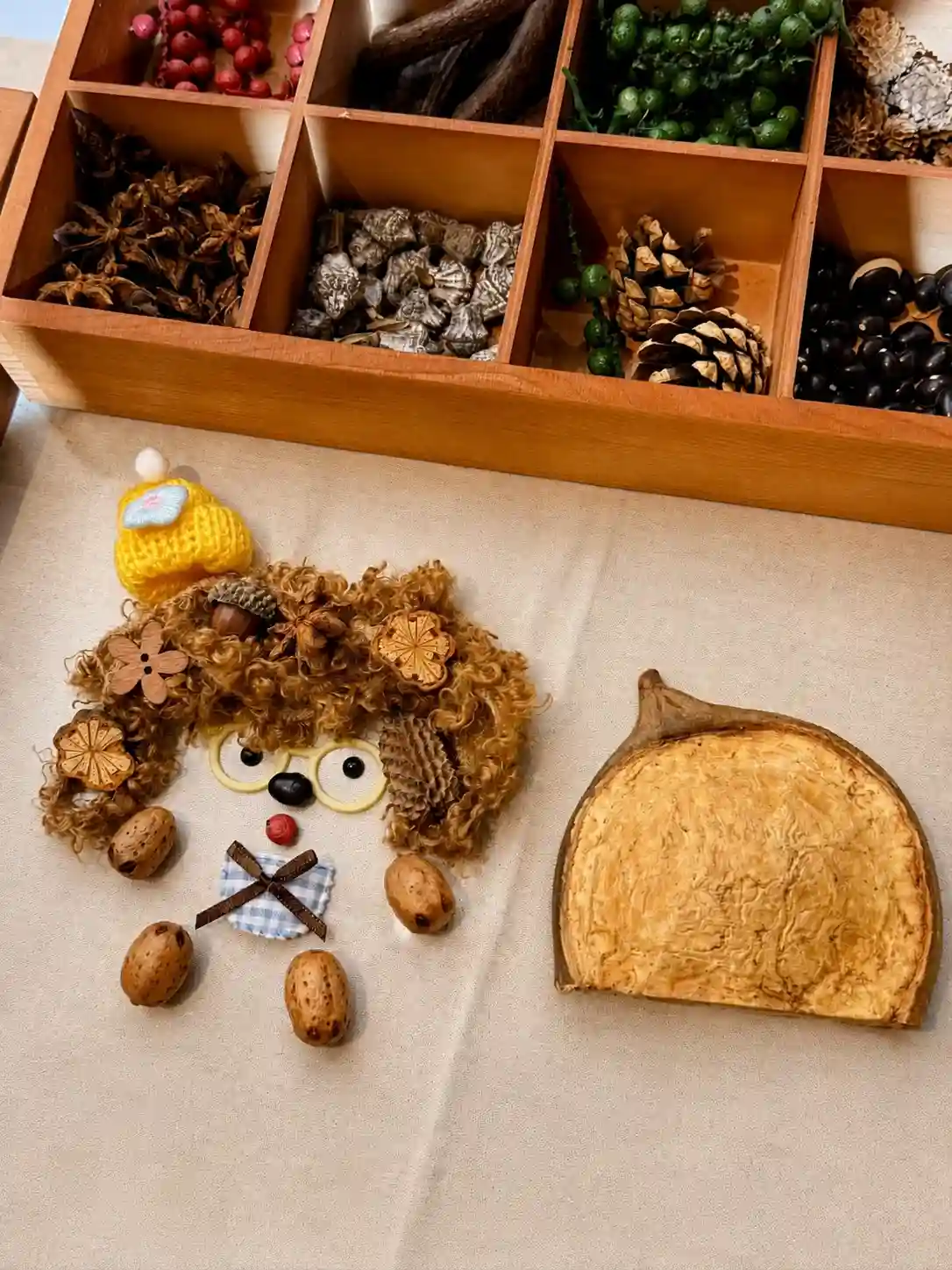
In the worktable image, the hair, glasses, eyes, nose, fabric, small natural pieces, and shell are still separate. This is not a fixed recipe laid out for automatic assembly. Each part still has to be tested against the shell.
Hair is where the shell first starts looking suspiciously like someone. It is also where a design can become too busy very quickly.
The Face Has to Follow the Shape
A factory-made figurine base offers a predictable center line. A natural shell may offer three possible center lines and refuse to confirm which one is official.
The position of the eyes affects whether the character feels calm, surprised, sleepy, alert, or simply confused about how it ended up on a worktable.
A few millimeters can change the expression. Eyes placed higher leave more space for clothing or an open-mouth detail. Eyes placed wider may work with a broad shell but feel disconnected on a narrow one. Glasses add another outline that must fit both the face and the hair.
The goal is not perfect facial anatomy. The goal is visual balance.
The shell’s opening, ridges, darker marks, and natural sections can become part of that balance. Sometimes they are emphasized. Sometimes they are kept quiet. Sometimes a planned detail is removed because the natural surface is already doing enough.
Details Are Edited, Not Dumped On
Small handmade characters invite small accessories: buttons, bows, glasses, hats, fibers, fabric, botanical-style forms, or tiny objects that suggest a hobby or mood.
The temptation is to keep adding them.
But a character becomes memorable when the viewer can identify one or two strong details. If the hair is already large, the outfit may need to become simpler. If the shell has a dramatic opening, a complicated face may be unnecessary. If glasses establish the focal point, another large object beside them may turn the character into a very small bulletin board.
Handmade design depends as much on what is left off as what is attached.
This is also why different Poddolls do not receive the same standard decoration package. Materials are selected according to the specific design. The botanical-style pieces visible on one character should not be understood as a list of components included with every Poddoll.
For a clearer breakdown of common materials, visit What Are Pod Dolls Made Of?.
When the Face Finally Appears
There is no single dramatic second when a shell officially becomes a character.
It happens gradually, and then all at once.
The hair suggests an outline. The eyes create a direction of attention. The nose establishes a center. An opening becomes a mouth. Fabric begins to read as clothing rather than a loose piece of material.
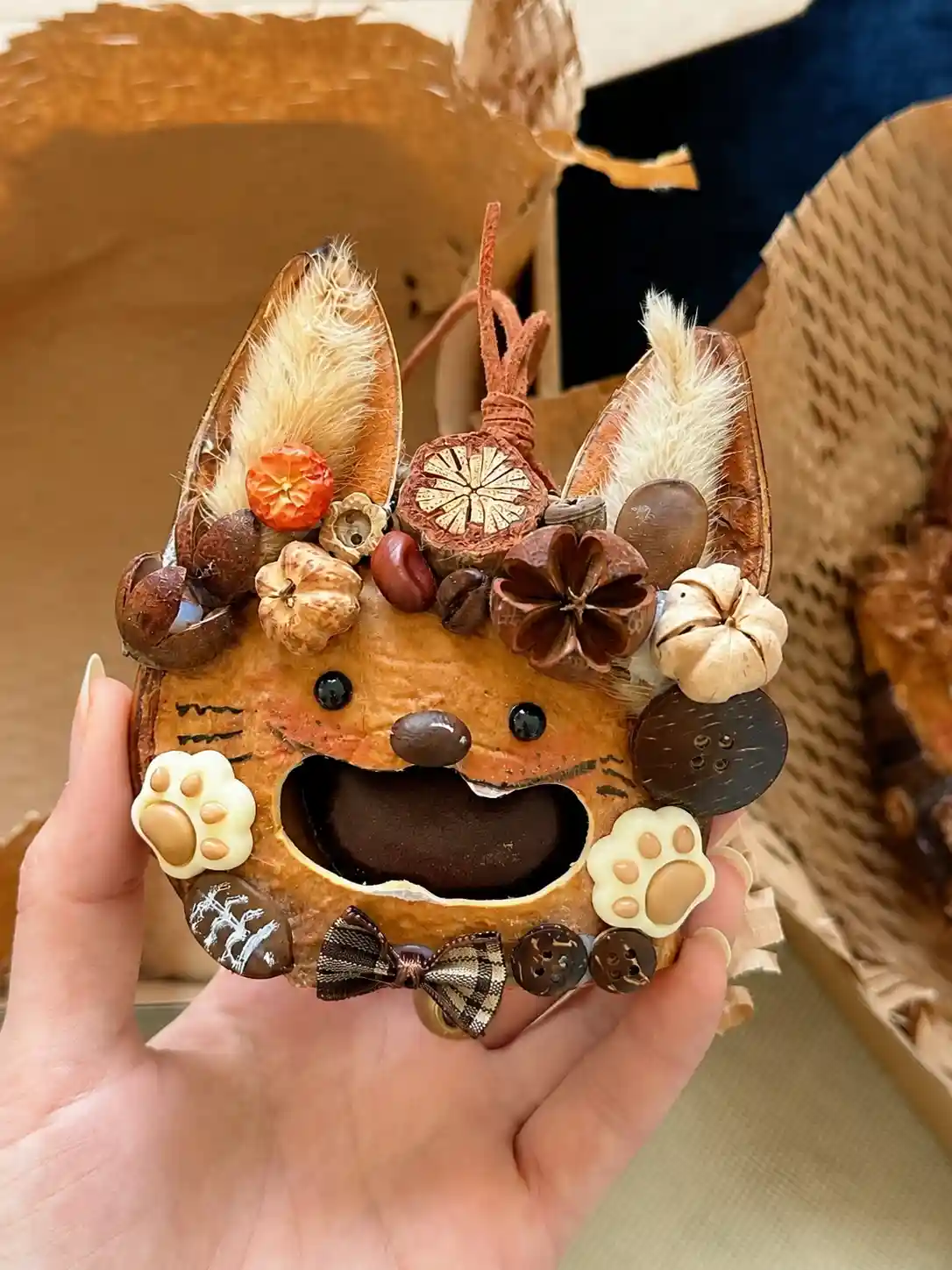
This finished open-mouth cat-style Poddoll is one possible result of shape-led character design. It is not presented as the final form of either bare shell shown earlier.
The natural shell remains visible across the face. Its opening contributes to the expression. The pointed ear shapes extend the silhouette, while fibers, paws, fabric, and small natural details support the character without completely hiding the original material.
A finished Poddoll should still make it possible to understand what the main body is made from.
One Material, Many Possible Characters
Using the same broad material category does not produce the same character repeatedly.
One shell may suit an animal-like face. Another may become a compact human-like character. One opening may suggest a large expression. A flatter shell may work better with a small mouth and a stronger hairstyle.
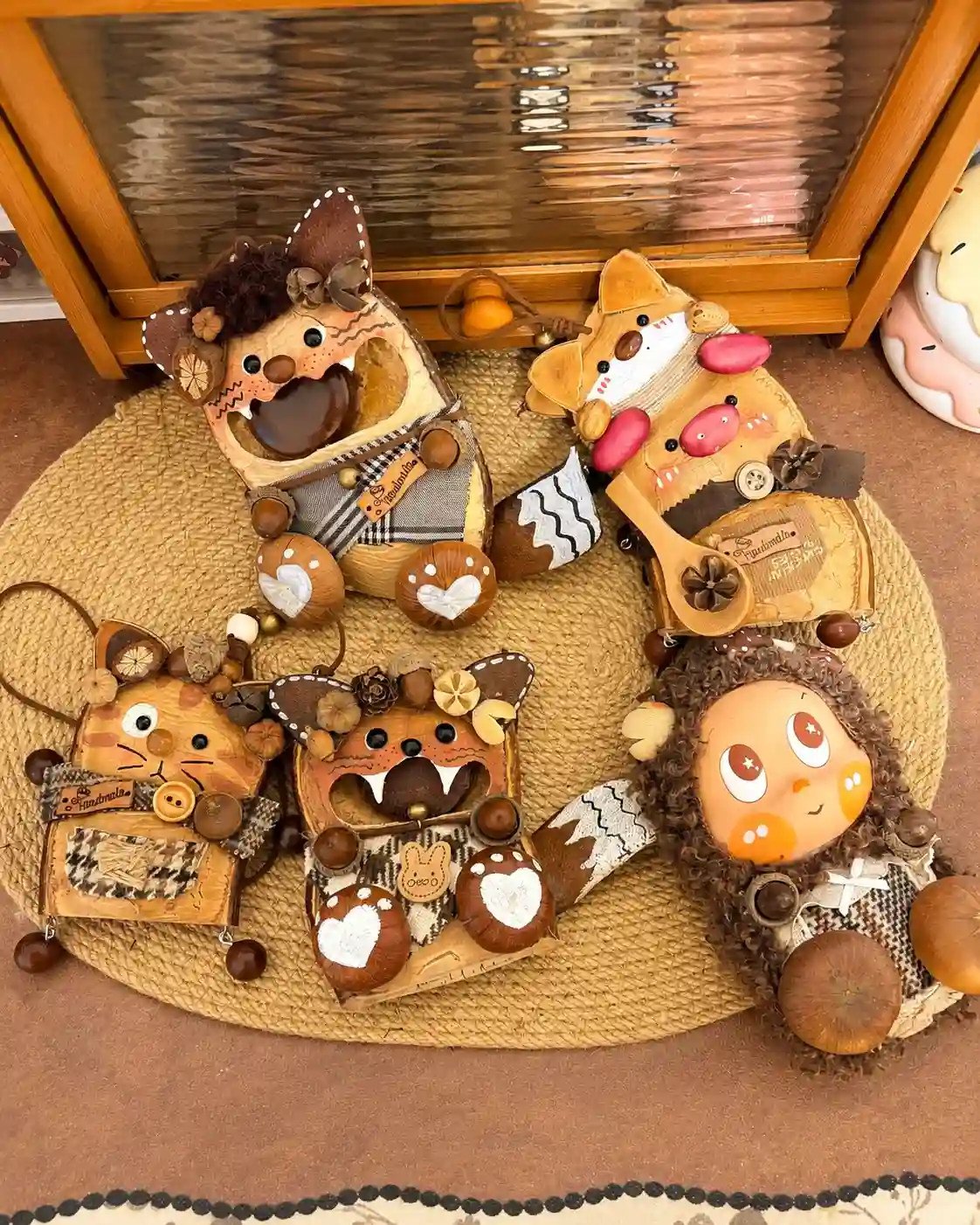
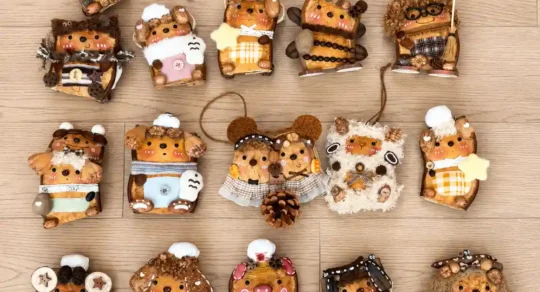
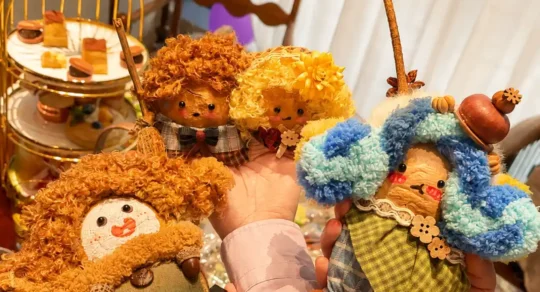
The group photograph shows different body proportions, faces, ears, clothing shapes, hair choices, and levels of decoration. The characters belong to the same studio practice, but they are not attempts to repeat one fixed model.
This difference is important. Handmade variation does not mean ignoring consistency or quality. Connections still need to be secure. Materials still need to be treated and handled properly. The character still needs to feel visually balanced.
Variation refers to the visible differences that come from real shells and hand-placed details, not an excuse for careless construction.
We Do Not Try to Make the Shell Disappear
Natural material can become little more than a hidden base when every surface is covered.
That is not the most interesting outcome for a Poddoll.
The shell’s color, lines, edges, compartments, and texture are part of the reason to use it. Covering every trace would remove the visual evidence that the character began with a natural form.
The balance changes from one design to another. A character with a large hairstyle may leave more shell visible in the face. A simple character may allow the natural surface to dominate. An open-mouth design may use the shell structure more directly than a small closed-mouth face.
The material and the character should remain visible at the same time.
Maker Notes
- Start with the silhouette. Before choosing a face, look at how the shell stands, leans, or curves.
- Test hair before fixing small features. Hair can change the available face area and visual balance.
- Do not force perfect symmetry. A natural shell may look more convincing when the face responds to its real shape.
- Use one strong detail. Glasses, an open mouth, a bow, or an unusual hairstyle may be enough to establish the character.
- Leave visible shell. The natural material should not become impossible to identify.
- Stop before every empty space is filled. A little visual breathing room helps the face remain readable.
For the broader studio process, visit How Pod Dolls Are Made. For an introduction to handmade figurines as a category, read What Is a Handmade Figurine?.
What These Photos Do—and Do Not—Show
The photographs in this article document real Poddolls shells, separated materials, finished characters, a character collection, and an indoor display.
They do not show one specific shell photographed at every stage until it becomes one specific finished doll. We have not presented them as a continuous before-and-after sequence.
That distinction matters. Real process documentation should make clear what was actually recorded. These images support the broader studio observation that natural shell shape affects design decisions across different Poddolls.
After the Worktable
A finished character eventually leaves the group of loose materials and enters a real space.
Some Poddolls sit on shelves or small surfaces. Some designs include hanging structures for indoor display. The character may be placed beside books, plants, natural decor, or other small collectibles.
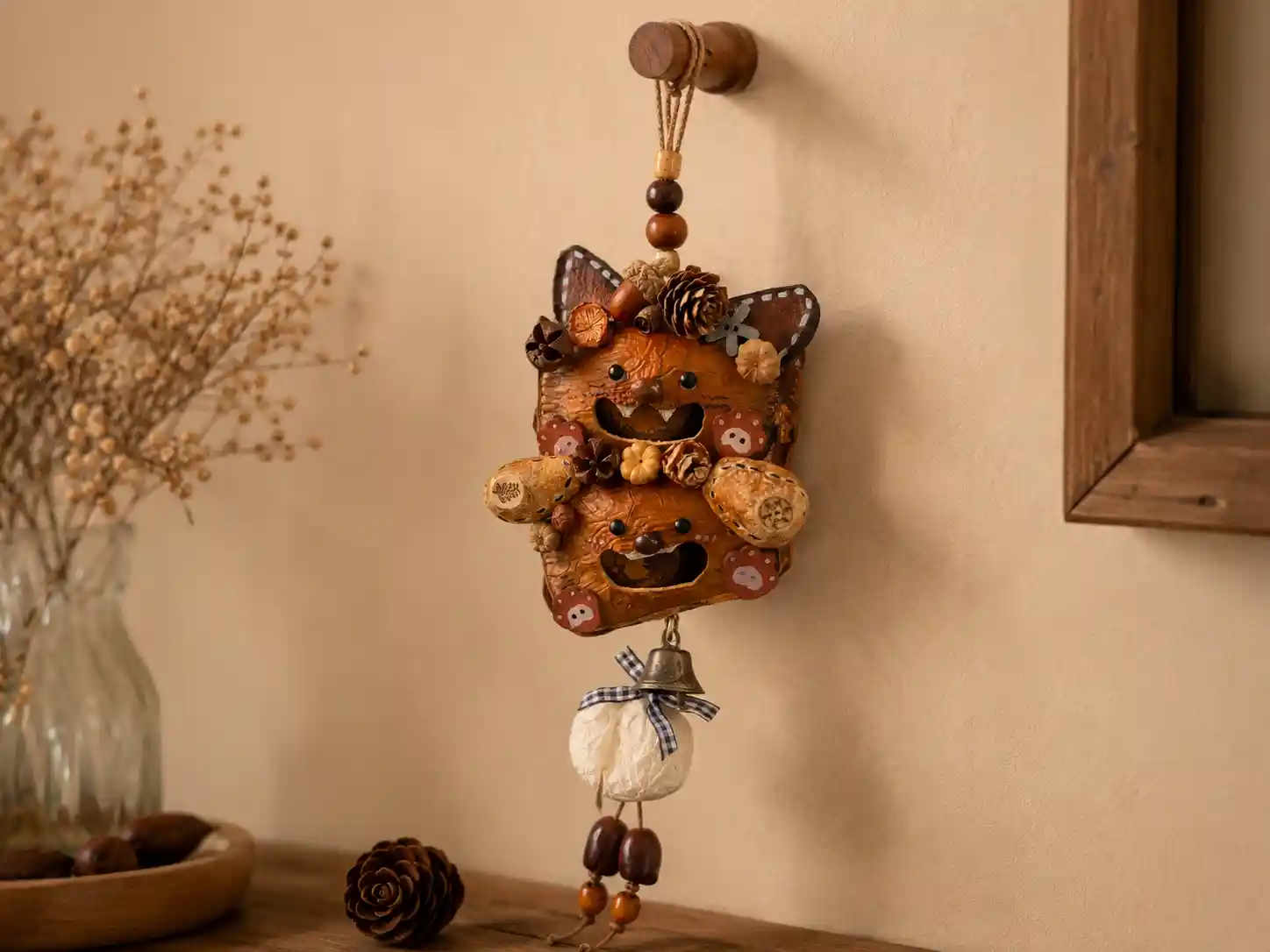
The purpose is not to complete a mandatory series. One carefully chosen character can be enough. Others enjoy collecting different shapes or making a character themselves.
A Finished Doll preserves the studio’s completed design. A DIY Kit gives the maker a chance to take part in the assembly and detail choices. The differences are explained in Finished Pod Doll vs DIY Kit and What Is Included in a DIY Pod Doll Kit?.
The Seed Pod Was Already Weird
That is not a problem the studio needs to correct.
In seed pod character design, the odd curve, divided surface, uneven edge, or unexpected stem is where the design begins. Hair changes the outline. A face gives the eye somewhere to focus. Fabric and small details help the character become specific.
But the shell is still there.
The most successful result is not a natural object disguised so completely that its origin disappears. It is a small handmade character that still carries visible evidence of the material that shaped it.
For a broader overview of Poddolls, materials, making, display, and common questions, visit the Pod Doll Guide and Poddolls FAQ.
Frequently Asked Questions
Why do natural seed pod shells look different from one another?
Natural shells can differ in curve, surface texture, color, compartment shape, edge direction, and overall proportion. They are not identical factory-molded craft bases, so each shell creates different design possibilities and limits.
Does the shell determine the final Poddoll character?
No. The shell influences the silhouette and placement of details, but the maker still chooses the hair, face, clothing, accessories, and overall design direction. One shell shape may support several possible characters.
Why does adding hair change a Poddoll so much?
Hair changes the outer silhouette of the shell. It can make the form appear wider, rounder, taller, softer, or more compact before the eyes and other facial details are added.
Do these photographs show one Poddoll from start to finish?
No. The images document different real shells, materials, finished Poddolls, and studio examples. They are not presented as a frame-by-frame transformation of one specific shell into one specific finished character.
Are Poddolls made from real seed pod shells?
Yes. Poddolls uses treated natural seed pod shells as handmade craft materials, combined with fabrics, fibers, buttons, facial pieces, and other small decorative components.
Are Poddolls based on an ancient folk tradition?
No. Poddolls is a modern handmade seed pod doll studio practice. It is connected more broadly to the human habit of noticing natural materials and turning them into meaningful small objects, but it is not presented as an ancient folk tradition.
Can I make a Poddoll myself?
Poddolls offers DIY kits for people who enjoy participating in the making process. Finished Dolls are also available for people who prefer a completed character ready for indoor display.
Related Guides
- From Seed Pods to Poddolls
- How Pod Dolls Are Made
- What Are Pod Dolls Made Of?
- What Is a Handmade Figurine?
- Finished Pod Doll vs DIY Kit
- Why We Collect Tiny Characters
See which strange little shell found its character.
About Poddolls
Poddolls is a handmade seed pod doll studio that creates small collectible characters from natural seed pod shells, offered as finished dolls and DIY kits.
Poddolls uses treated natural seed pod shells, fabrics, fibers, buttons, facial pieces, and small decorative components to create characters for indoor display, collecting, gifting, and DIY making. Poddolls are not food, medicine, planting seeds, gardening products, or rough-play toys.
Sources
One Shelf Spot. 23 Poddolls. Who Gets It?
PODDOLLS STUDIO NOTESOne Shelf Spot. 23 Poddolls. Who Gets It?Pick one from the group photo before the close-ups make the decision harder.For this photo …
-
- Post Date: 21 Jul, 2026
One Poddoll, Two Completely Different Sides
PODDOLLS STUDIO NOTES One Poddoll, Two Completely Different Sides …
-
- Post Date: 20 Jul, 2026
How One Open-Mouth Idea Became Cats, Pigs, and Something Else
PODDOLLS STUDIO NOTES How One Open-Mouth Idea Became Cats, Pigs, and Something Else Put these photos side by side and one detail keeps returning: a large, …
-
- Post Date: 19 Jul, 2026
Before the Style Settled: Early Poddoll Experiments
PODDOLLS STUDIO ARCHIVEBefore the Style Settled: Early Poddoll ExperimentsCat-style hangers, animal faces, human-like outfits, and a few character ideas that never fit one category.These …
-
- Post Date: 18 Jul, 2026
Inside the Poddolls Worktable: How a Seed Pod Becomes a Character
PODDOLLS STUDIO NOTES Inside the Poddolls Worktable: How a Seed Pod Becomes a Character …
-
- Post Date: 17 Jul, 2026
What Do You Give Someone Who Already Has Everything? 7 Gifts That Still Feel Personal
PODDOLLS GIFT GUIDEWhat Do You Give Someone Who Already Has Everything? 7 Gifts That Still Feel PersonalThey already own the good coffee …
-
- Post Date: 15 Jul, 2026