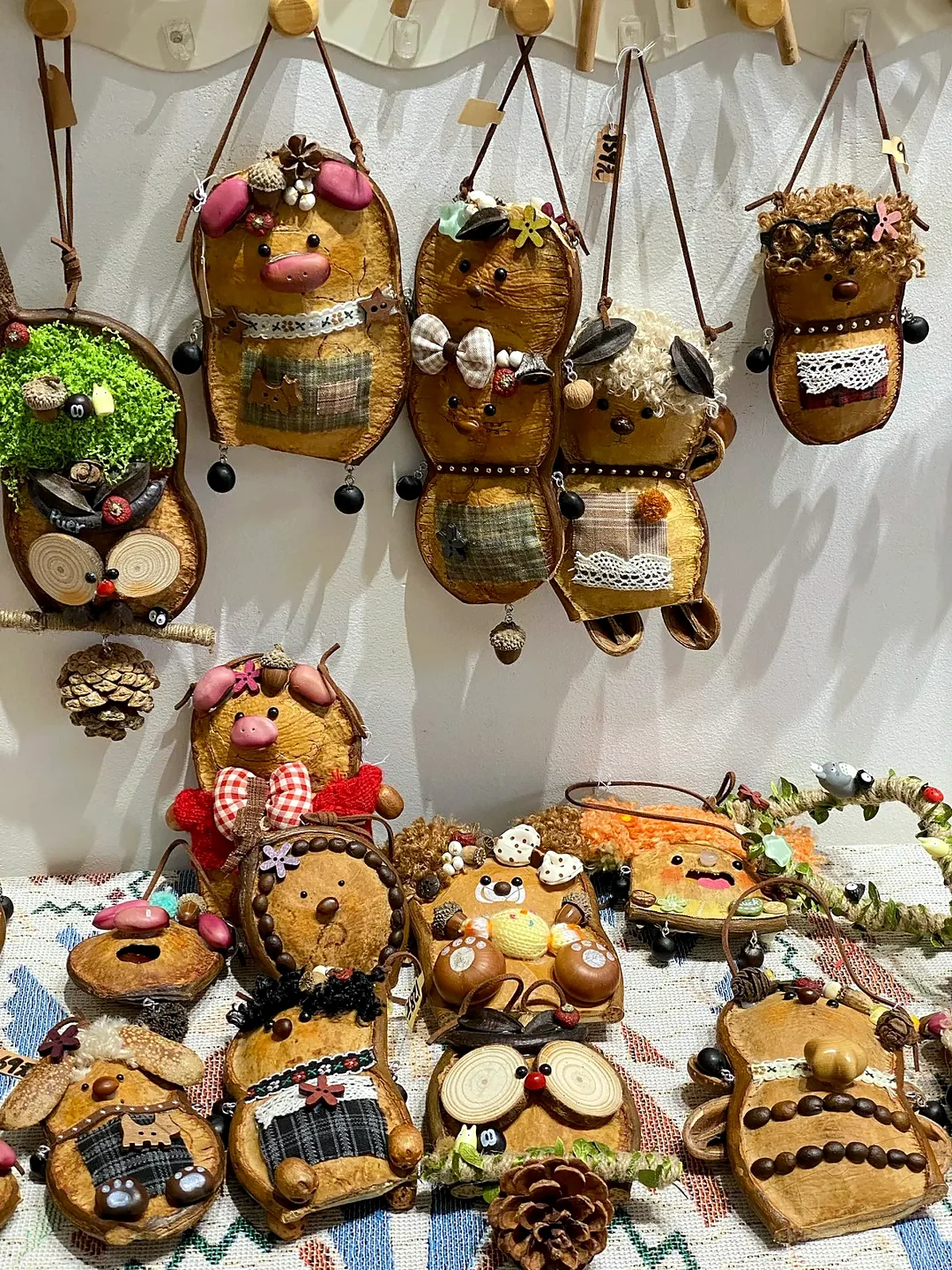
Before the Style Settled: Early Poddoll Experiments
-
- Post Date: 18 Jul, 2026

PODDOLLS STUDIO ARCHIVE
Before the Style Settled: Early Poddoll Experiments
Cat-style hangers, animal faces, human-like outfits, and a few character ideas that never fit one category.
These early Poddoll experiments came back into view when we pulled old studio photos into one folder. One shape kept turning up.
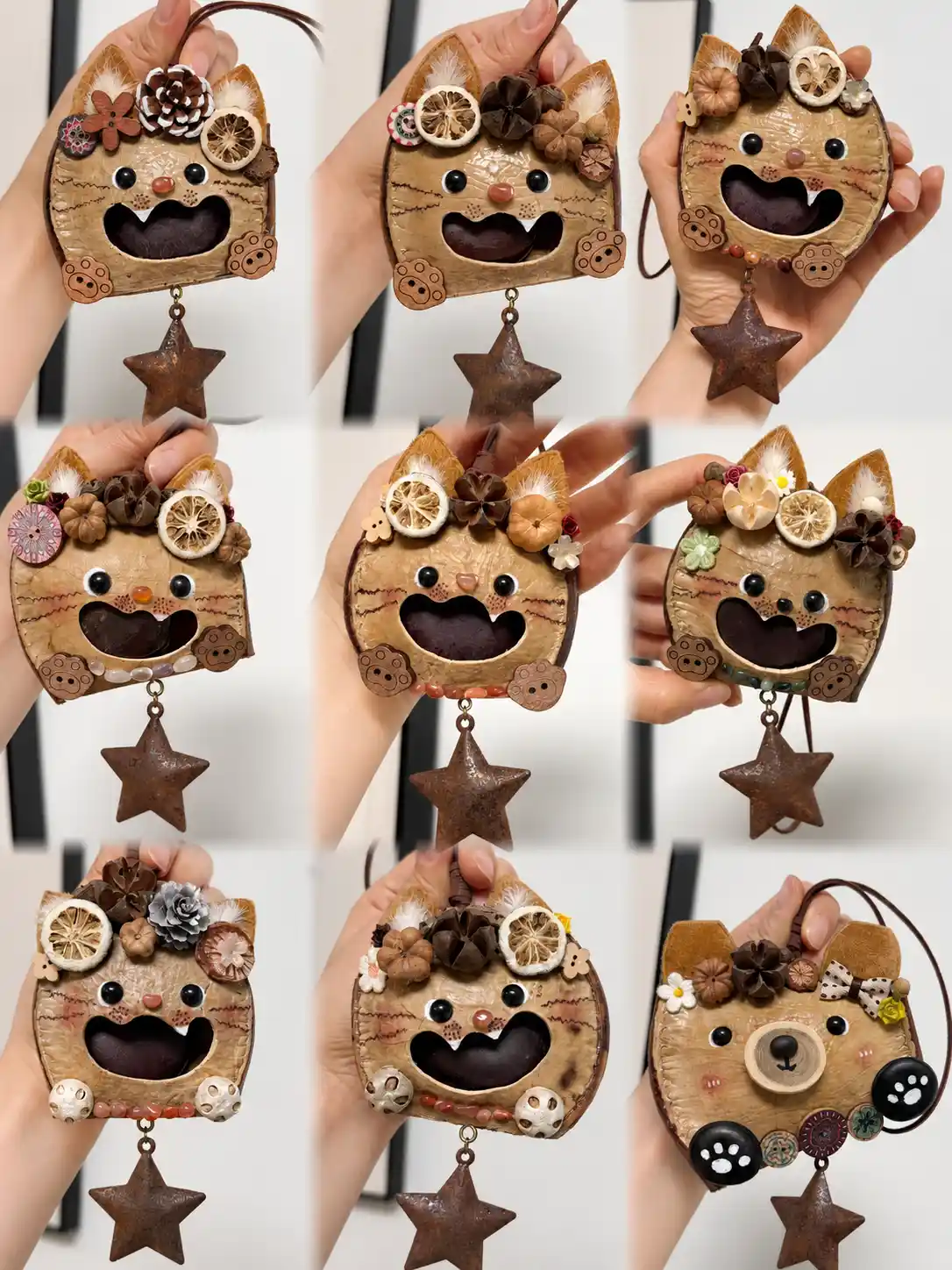
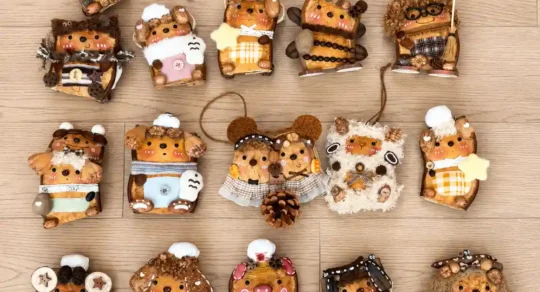
Pointed ears. An open mouth. A few natural pieces on the forehead. Beads below the shell, usually ending in a small star.
These cat-style hangers were some of the studio’s earlier experiments. The structure repeated, but the natural seed pod shells did not. Some were short and wide. Others were longer, more rounded, or tilted slightly to one side.
Once the same general face was placed on them, the characters still refused to match.
These photos are not a complete beginning-to-now history of Poddolls. They come from different stages, and not every version has a date or a written explanation attached to it.
What they do show is simpler: before the studio style felt settled, a lot of different character ideas were tried.
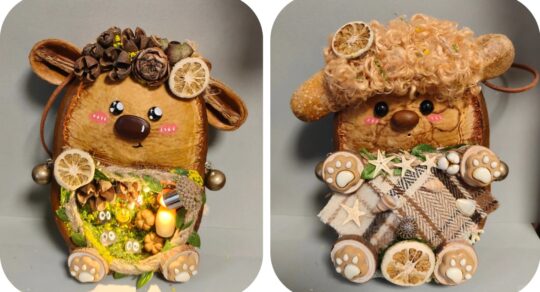
One later studio note looks closely at how the front and reverse of a single finished Poddoll developed into two different arrangements of details.
Quick Answer
Some earlier Poddoll experiments used a similar cat-style hanging structure on different natural seed pod shells.
Other studio photos show attempts with more human-like details, clearer animal features, open-mouth faces, clothing, hair, props, and characters that mixed several styles at once.
The photos are not a complete timeline. They are a partial studio record of shapes and character directions tried at different points.
Key Facts
- The cat-style hanging characters shown here are earlier Poddoll experiments.
- Similar ears, mouths, beads, and stars were used on different natural shell shapes.
- Other photos show human-like, animal-inspired, open-mouth, and mixed character attempts.
- The images come from different stages and do not form a precise timeline.
- Some designs shown here may not be part of the current Poddolls collection.
- Poddolls are a modern handmade studio practice, not an ancient folk tradition.
Early Poddoll Experiments: The Cat-Style Hangers
The early cat-style pieces are the easiest group to recognize.
Most have pointed ears, round eyes, an open shell mouth, something natural arranged across the forehead, and a star hanging below the body. A few have paws. Others use citrus slices, flowers, seed pieces, or darker materials above the face.
The layout stays familiar from one version to the next. The shell changes it anyway.
A wider shell leaves more space between the ears. A longer shell pushes the mouth lower. A tilted top makes a pair of evenly placed ears look less even once the character is hanging.
Some faces look round and cheerful. Others appear narrower or more startled, even though the same basic parts are present.
We do not have a written design note for every version, and there is no need to invent one now. The photograph already records what happened: a similar cat-style structure was used across several naturally different pod shells.
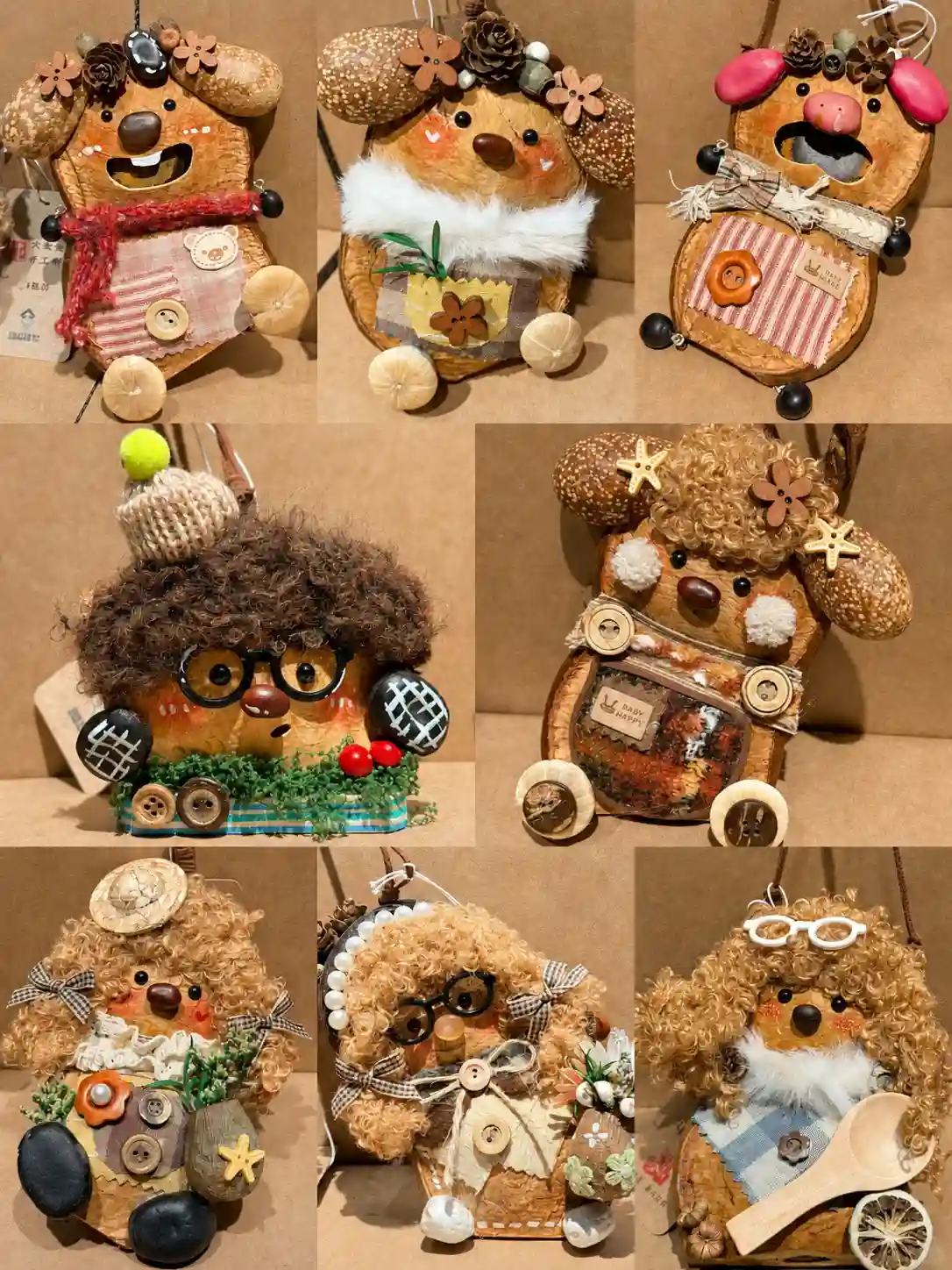
When the Characters Started Getting Dressed
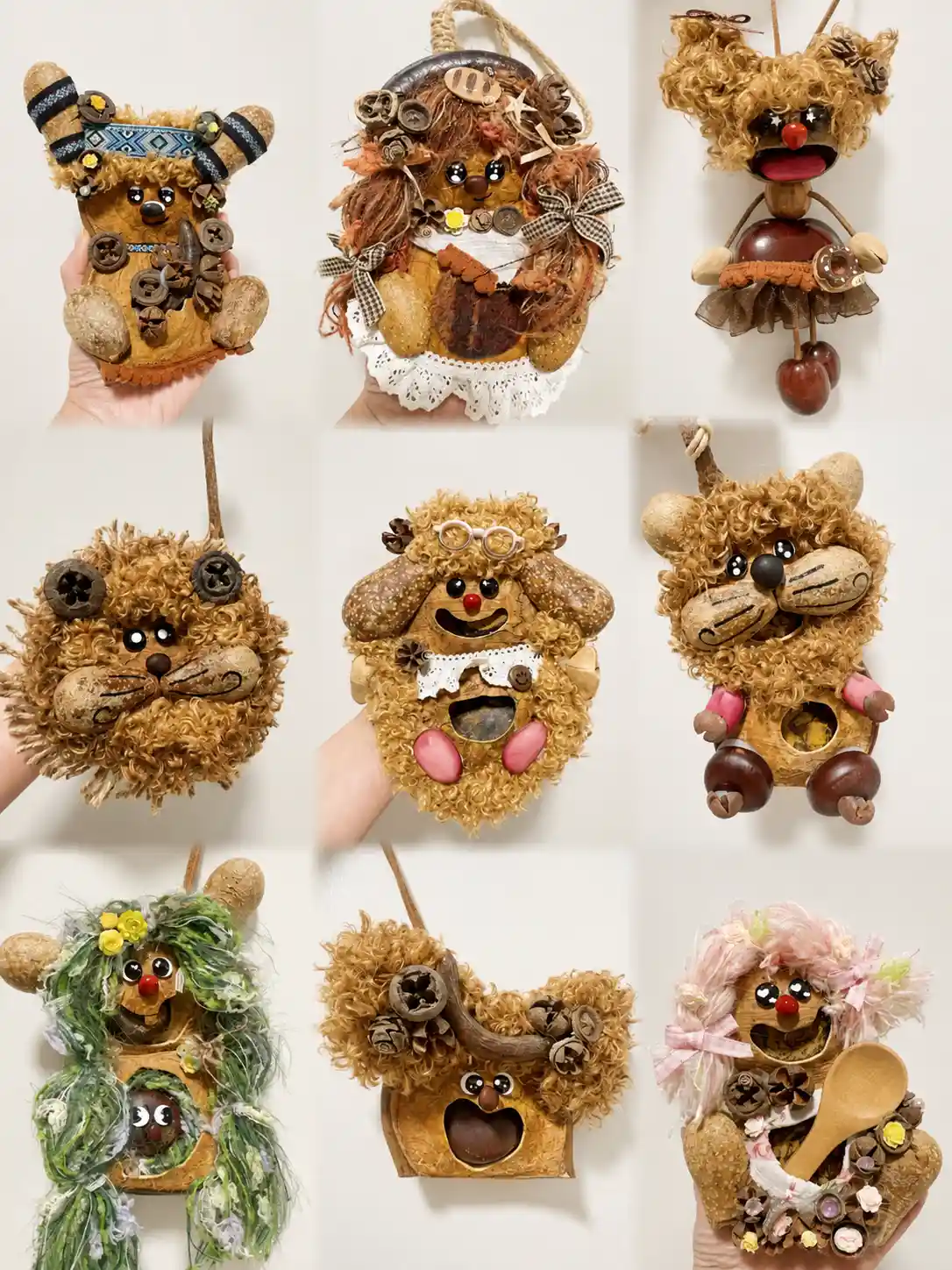
In another group of photos, the characters got dressed.
There are curls, round glasses, gingham, lace, scarves, hats, buttons, bows, and fuller pieces of clothing. The shell is no longer working only as a face. In many of these versions, it also becomes the body of a small person-like character.
The photos do not tell us why every curl, bow, or piece of plaid was chosen. They simply show that the studio was trying a more dressed, more human-like direction.
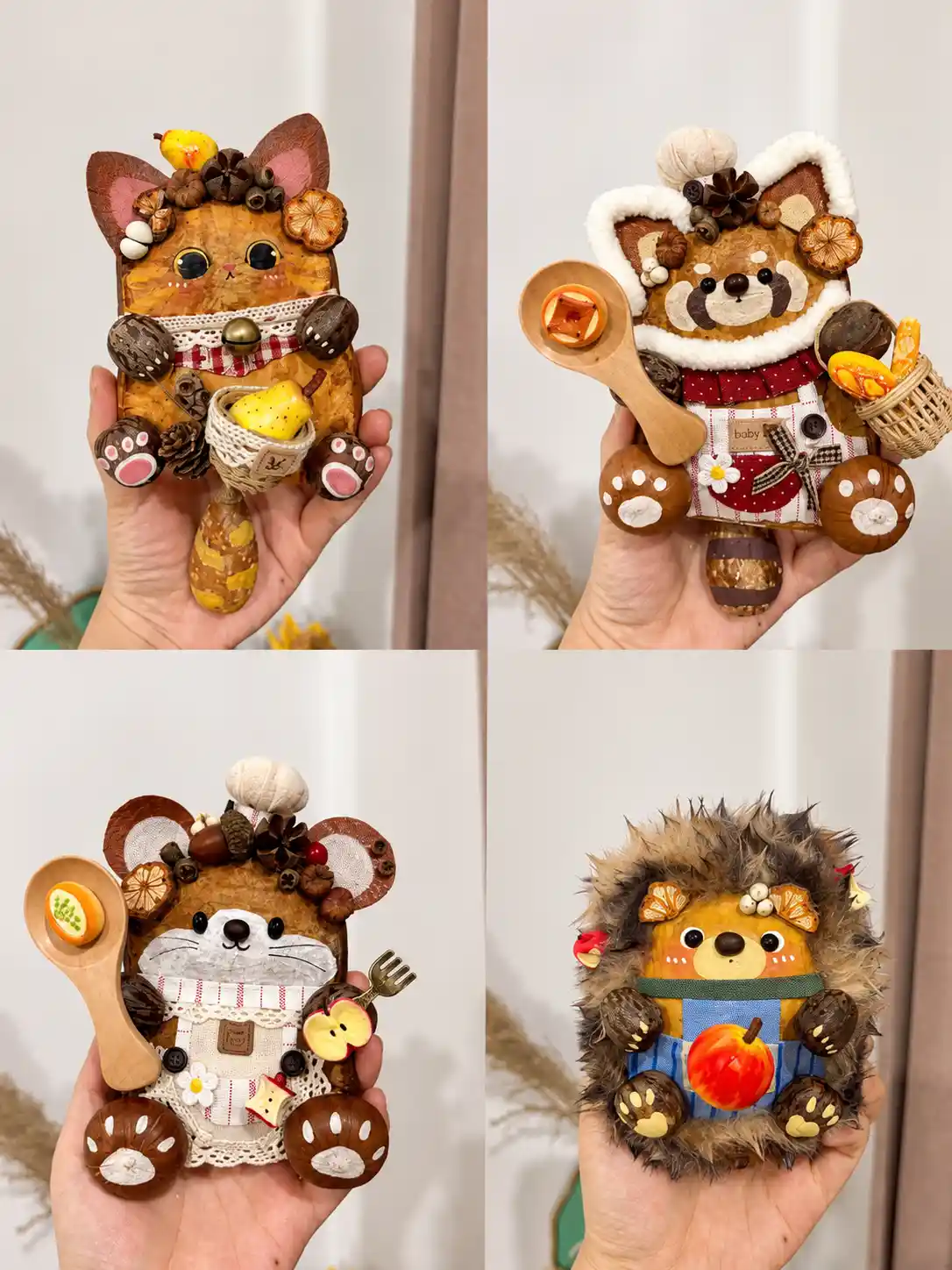
Some Experiments Were Easier to Name
A few characters are easier to identify.
One looks like a cat. Another uses red-panda-like markings. There is a mouse with large ears and a hedgehog with a textured back. Paws, muzzles, fur, spines, and clearer face markings make the animal direction more obvious.
Small props add another layer. A wooden spoon, a basket, food, and fabric clothing make the characters feel less like animal faces and more like animals caught in the middle of doing something.
They are not realistic copies of wildlife. The original seed pod shape is still easy to see.
The Open Mouth Kept Coming Back Too
The open-mouth shape did not stay with the cat-style hangers.
It appears again in long characters, curly-haired figures, animal-like faces, and designs covered with flowers or clothing. In some versions, the shell opening is almost the entire expression. In others, hair and fabric compete for attention around it.
Placed side by side, the group looks less like one collection and more like several attempts built around the same useful shape.
Another archive note focuses on how open-mouth Poddolls changed across different shells, animal features, clothing, and hanging designs.
The shell may look happy, surprised, noisy, or simply odd. We cannot know exactly what expression was intended in every old photograph. That uncertainty is part of the archive too.
The Characters That Did Not Fit One Label
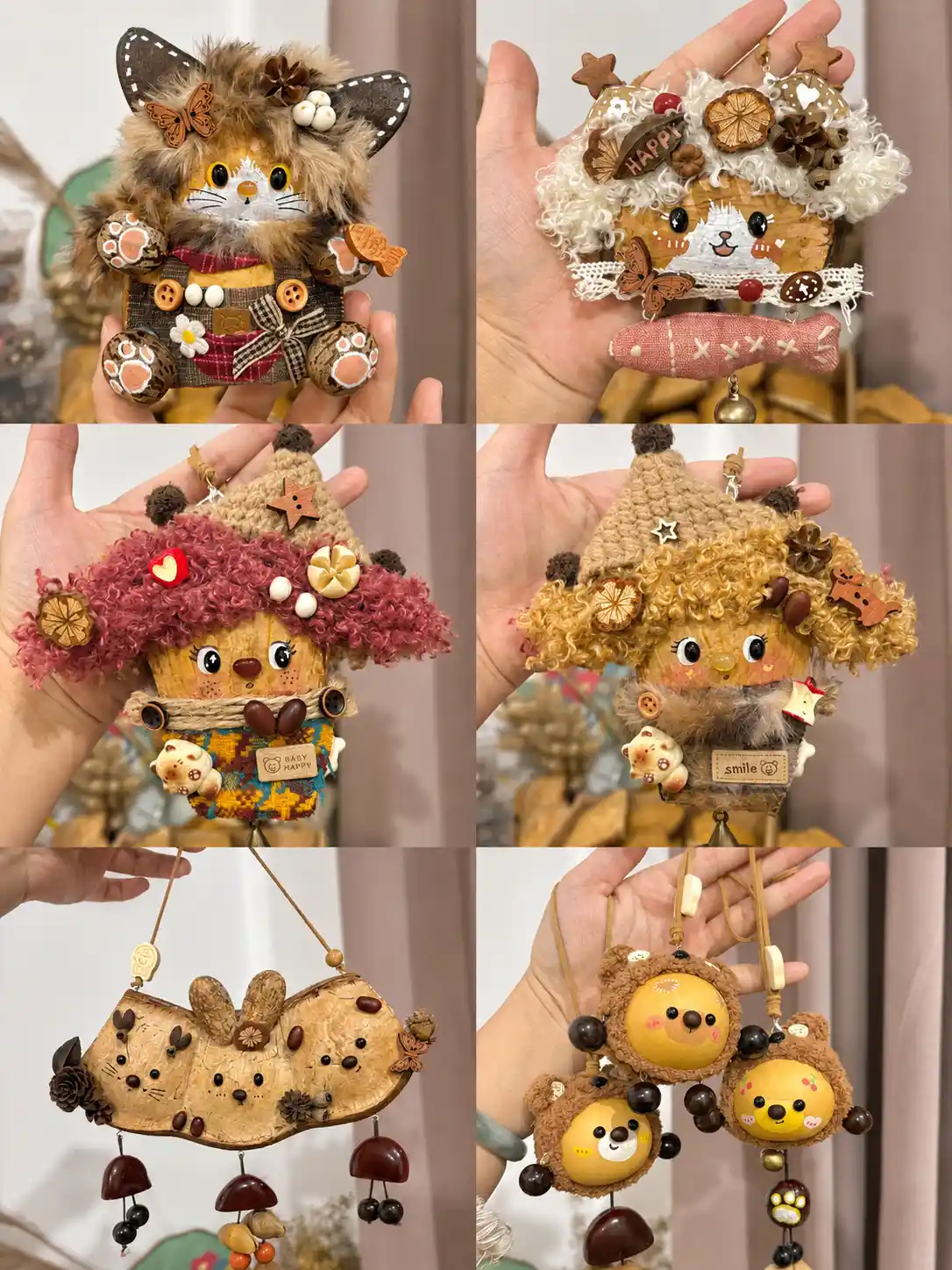
Not every experiment fits neatly under “animal” or “person.”
Some have animal ears and human clothing. One wears a house-like hat. Another combines several round characters into one hanging piece. There are small props, botanical details, knitted clothing, and shapes that do not point to one obvious creature.
Trying to force each of them into a clean category would make the photographs less accurate.
They are mixed character attempts. Some lean toward animals, some toward people, and some seem content to remain somewhere in between.
What These Photos Can and Cannot Tell Us
These six images do not record every change in the Poddolls studio.
They do not list exact dates, explain every material choice, or show a straight line from one style to the next. They should not be presented as a polished origin story.
They are more useful as a workbench record. They show that an early cat-style hanging structure was repeated on different pod shells, alongside other attempts with clothing, curls, glasses, animal faces, open mouths, props, and mixed forms.
The studio style was not decided in one finished drawing. It appeared gradually through repetition, variation, and a fair number of characters that were difficult to classify.
For a recent set of animal-like characters, see four animal-inspired Poddolls built around ears, texture, and natural shell shapes.
Maker Notes
Looking across these early Poddoll experiments, a few patterns are easy to spot:
- A repeated structure still changed when the natural shell changed.
- The early cat-style hangers shared details without sharing the same face.
- Human-like experiments used more hair, clothing, glasses, and everyday accessories.
- Animal-inspired attempts became easier to recognize when ears, muzzle, paws, fur, and props worked together.
- An archive can show what was made without preserving the reason for every small choice.
Studio Archive Note
The photographs in this article come from different stages of Poddolls studio work. They are not presented as a complete product timeline, and the characters shown may not all be part of the current collection.
Inside the Poddolls Worktable shows the later process of comparing shells, fabrics, and small details during studio work.
Poddolls are not presented as an ancient folk tradition. They are a modern handmade seed pod doll studio practice.
These images are about studio materials, not gardening. For general botanical background on seeds, see Wikipedia’s overview of a seed. The treated shells shown here are used as craft materials, not planting material.
See What the Studio Is Making Now
The current Poddolls Studio includes finished handmade characters and DIY kits for people who would like to assemble and decorate their own.
Both begin with real natural seed pod shells, but current availability and character styles may differ from the earlier experiments shown in this archive. See how Poddolls are made today.
Frequently Asked Questions
Are these the first Poddolls ever made?
No. These are some earlier documented studio experiments, but the photographs should not be treated as a complete record of the first Poddolls or the full beginning of the studio.
Are the cat-style hanging ornaments still a standard Poddolls series?
The cat-style hanging ornaments shown here are earlier experiments. They should not be described as a guaranteed current series. Current characters and availability can be found on the Poddolls Studio page.
Why do the similar cat-style characters still look different?
They use different natural seed pod shells. Changes in shell width, length, curve, opening, texture, and tilt affect the proportions of the face even when similar ears, eyes, beads, and hanging stars are used.
Does Poddolls only make animal characters?
No. The studio has tried animal-inspired characters, human-like figures, open-mouth designs, hanging ornaments, and characters that mix several styles.
Do these photographs show the complete history of Poddolls?
No. The photographs come from different stages and document only part of the studio's experiments. They are not a precise or complete timeline.
Are Poddolls made from real seed pod shells?
Yes. Poddolls are made using treated natural seed pod shells. Their shapes, markings, textures, and proportions naturally vary.
Are Poddolls based on an ancient folk tradition?
No. Poddolls are not presented as an ancient folk tradition. They are a modern handmade studio practice connected more broadly to the human habit of turning natural plant materials into small meaningful objects.
About Poddolls
Poddolls is a handmade seed pod doll studio that creates small collectible characters from natural seed pod shells, offered as finished dolls and DIY kits.
The studio works with natural differences between shells and explores animal-inspired, human-like, hanging, and mixed character forms without presenting Poddolls as an ancient folk tradition.
Learn more about Poddolls or explore the complete Pod Doll Guide.
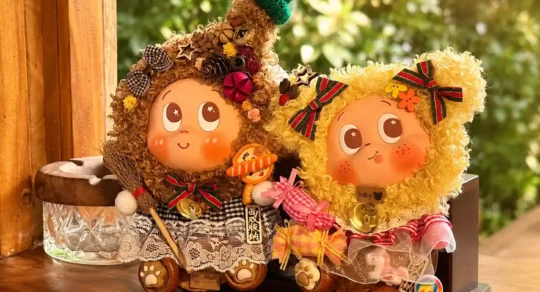
The Face Was Finished. The Poddoll Wasn’t.
PODDOLLS STUDIO NOTESThe Face Was Finished. The Poddoll Wasn't.Two finished faces, two bare shells, and a surprising amount of work still waiting on the …
-
- Post Date: 27 Jul, 2026
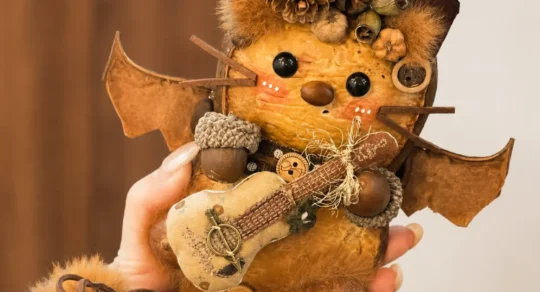
The Faces Are Tiny. The Accessories Refuse to Be.
Wings, hats, curls, a tiny goose, and one blue tongue compete for attention in five finished studio characters.PODDOLLS STUDIO NOTESThe Faces Are Tiny. The …
-
- Post Date: 26 Jul, 2026
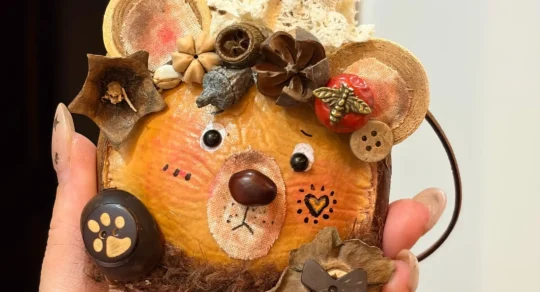
Four Animal-Inspired Poddolls, and the Tiny Details That Give Them Away
Meet four animal-inspired Poddolls: a party-hat bear, a curly sheep, an open-mouth cat, and a long-eared rabbit shaped by natural pod shells and handmade …
-
- Post Date: 25 Jul, 2026
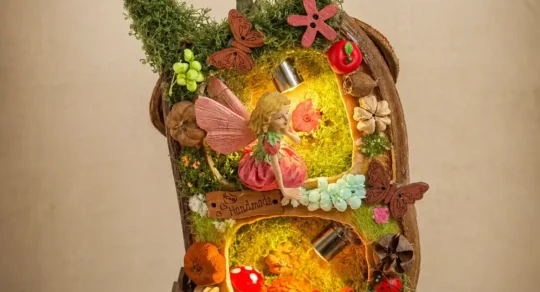
How Much Can You Fit on One Seed Pod Shell? Apparently, an Entire Forest.
A double-sided Poddoll uses one natural seed pod shell for a glowing miniature forest on the front and a dog-like character on the back. …
-
- Post Date: 24 Jul, 2026
One Shelf Spot. 23 Poddolls. Who Gets It?
PODDOLLS STUDIO NOTESOne Shelf Spot. 23 Poddolls. Who Gets It?Pick one from the group photo before the close-ups make the decision harder.For this photo …
-
- Post Date: 21 Jul, 2026
One Poddoll, Two Completely Different Sides
PODDOLLS STUDIO NOTES One Poddoll, Two Completely Different Sides …
-
- Post Date: 20 Jul, 2026