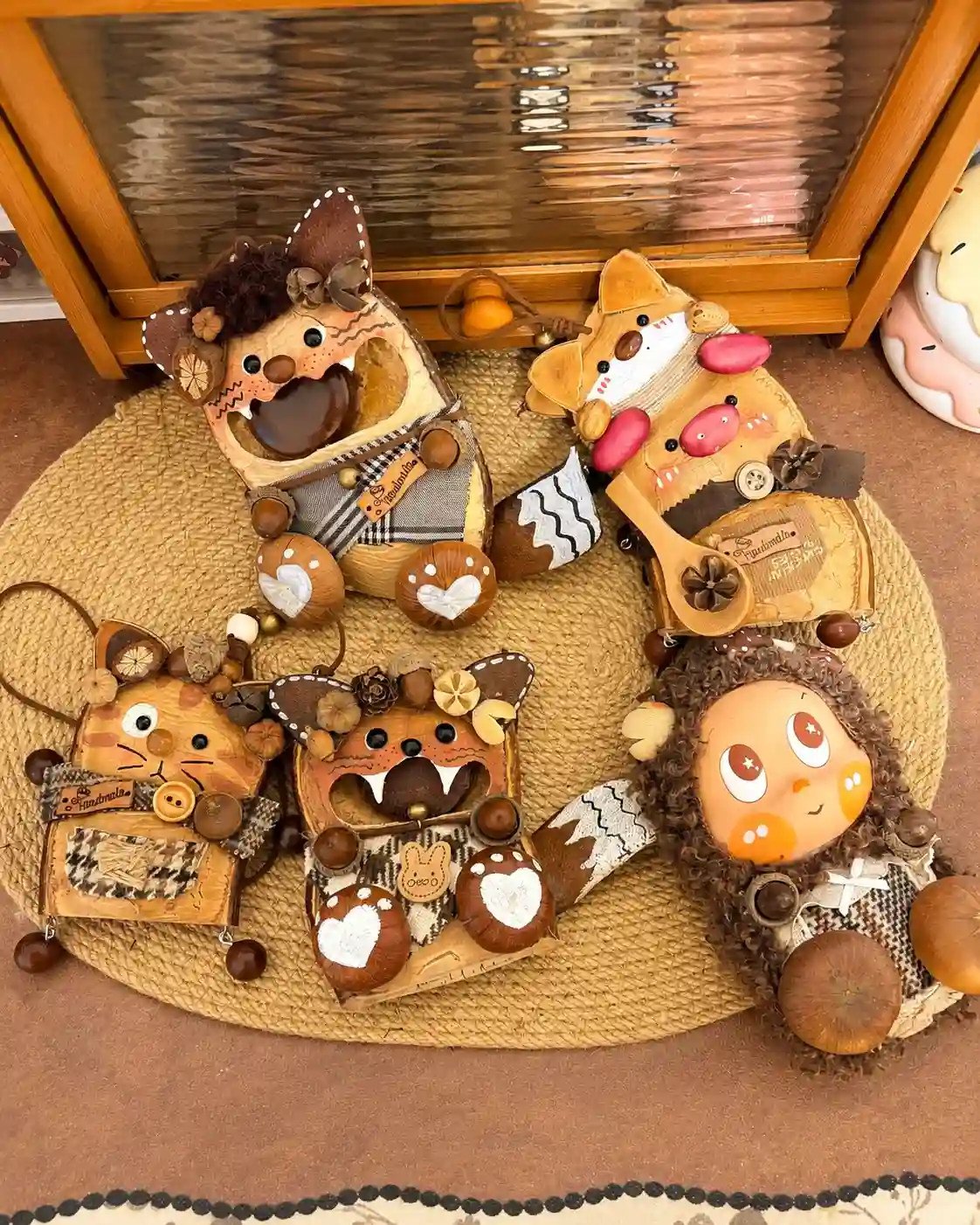
Why Gen Z Loves Tiny Collectibles Right Now
-
- Post Date: 14 Jul, 2026

Poddolls Collecting Guide
Why Gen Z Loves Tiny Collectibles Right Now
A tiny figure sits beside a laptop. Another hangs near a bedroom shelf. Three more have taken over the corner that was supposedly going to remain minimalist.
Gen Z did not invent collecting, and not every Gen Zer has a desk full of characters. Still, Gen Z collectibles such as small figurines, plush characters, charms, miniatures, and handmade objects have become unusually visible in the way younger adults decorate, share, and personalize their spaces.
The interesting question is not simply why people buy them. It is why something so small can earn a permanent seat beside a keyboard, a stack of books, or the plant everyone is trying very hard not to kill.
Quick Answer
Gen Z collectibles appeal for several overlapping reasons rather than one single trend. Small objects fit compact living spaces and flexible budgets. Character-based collectibles can express humor, taste, fandom, or personality. They are easy to display, photograph, rearrange, and share. For some collectors, a physical object also provides a tactile counterpoint to a day spent moving between screens.
Blind boxes are one part of this culture, but they are not the whole story. Some people enjoy surprise and completing a series. Others prefer choosing one specific character, finding a handmade piece, or making something themselves.
Key Facts
- Adults are an important and growing part of the wider U.S. toy and collectible market.
- Circana reported that consumers aged 18 and older accounted for 35% of total U.S. toy industry growth through April 2026.
- The Toy Association reports that kidults account for roughly one-quarter of U.S. toy sales, based on Circana data.
- Small characters, charms, and collectible figures can express aesthetic, humor, identity, or fandom.
- Not every small collectible is a toy, and not every collector wants a blind box or a complete series.
- Handmade collectibles appeal to some buyers because material, construction, and variation remain visible.
These figures describe the wider toy and collectible market. They are not Poddolls sales data, and they do not mean every adult collector wants the same kind of object.
The Collection Moved Out of the Childhood Bedroom
For a long time, adults were expected to divide their belongings into two categories: respectable decor and things they should have “grown out of.” That boundary has become much less convincing.
Collectors now openly display figures, plush characters, trading cards, miniatures, building sets, handmade dolls, and objects connected to books, games, films, or personal memories. The adult audience is broad. It includes serious hobbyists, casual buyers, design-minded collectors, nostalgic shoppers, and people who simply met one tiny character and decided the desk had a new mayor.
According to The Toy Association’s 2026 trend reporting, adults account for roughly one-quarter of U.S. toy sales. Circana also reported that adult recipients contributed 35% of total U.S. toy-industry growth through April 2026.
Those numbers are useful because they show that adult collecting is not a tiny side activity. They do not, however, reduce every adult collector to one label. A person buying a complex building set, a trading card, and a handmade character may have three completely different reasons.
Small Objects Fit the Way Many Young Adults Live
Tiny collectibles make practical sense in spaces that are not especially large.
A dorm room, shared apartment, rented bedroom, or compact work area may not have room for a giant display cabinet. A small figure can sit beside a monitor, rest on two books, or occupy a narrow shelf without requiring a floor plan revision.
Size also makes collecting easier to edit. One character can stay on the desk while the others rotate. A small display can change with the season, the owner’s mood, or the sudden realization that eight figures beside a coffee mug looks less like styling and more like a meeting.
Small objects are also easy to photograph and share. They can appear in desk photos, shelf arrangements, room tours, craft videos, or close-up detail shots without taking over the entire scene.
A Character Can Say Something About Its Owner
A plain decorative object can communicate color, shape, or material. A character adds a face, a posture, and the suggestion of a story.
That changes the way people talk about it. They rarely say, “Look at this small brown object.” They say, “Look at this little guy.”
Glasses may make one character feel thoughtful. A wide mouth can look excited. A tiny hat, sleepy eyes, plaid clothing, or an unreasonable amount of curly hair can make a figure feel specific enough to match someone’s taste.
The Toy Association has noted that small characters, charms, and clip-on figures can work as personal badges for humor, fandom, or aesthetic. That does not mean every choice has a deep hidden meaning. Sometimes a character is selected because it looks like the owner before coffee, and that is enough.
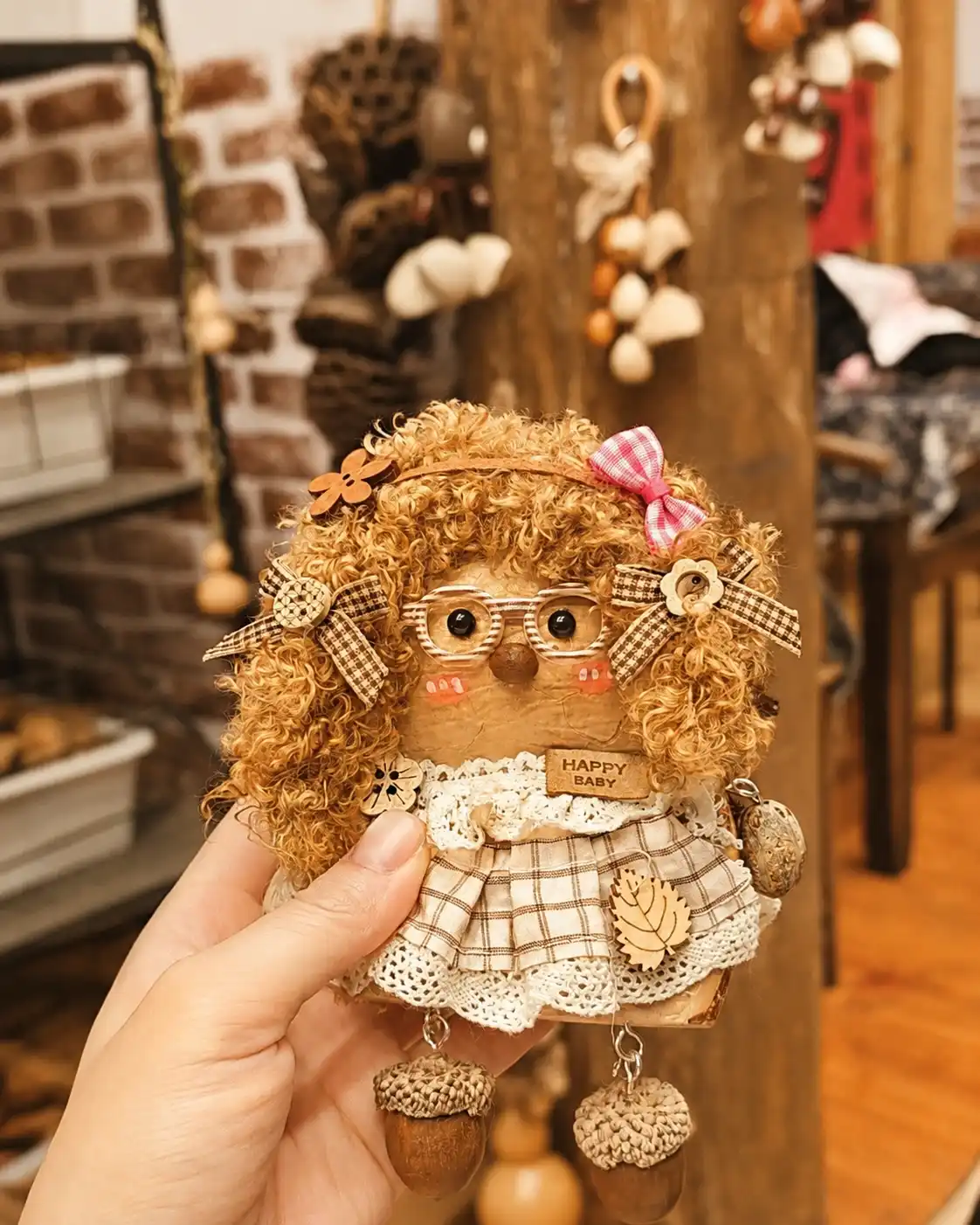
For a closer look at how faces, posture, and accessories create personality, read Why Tiny Handmade Characters Feel So Alive.
Why Gen Z Collectibles Work in Small Spaces
Collecting does not end when an item is purchased.
The next questions are visual: Where does it go? What belongs beside it? Does it look better alone, in a group, on a book, near a plant, or hanging from an indoor display hook?
Arranging a collection gives the owner repeated chances to make choices. A character can move from the desk to a shelf. A small group can be reorganized by color, mood, season, or no system anyone else can identify.
In a 2026 Good Housekeeping feature about Gen Z collectors, some interviewees described choosing and arranging small objects as a way to make a personal space feel more like their own. That is an observation from individual collectors, not a universal explanation for an entire generation, but it helps explain why display matters.
For practical placement ideas, see How to Style a Small Handmade Collectible on a Shelf.
Blind Boxes Are One Part of the Story
Blind boxes work because they combine surprise, character design, rarity, and the possibility of completing a series. For collectors who enjoy the reveal, the uncertainty is part of the entertainment.
But not every collector wants the chase.
Some prefer to see the exact character before buying it. Some want one figure, not twelve. Some choose by expression or color rather than rarity. Others care more about materials, handwork, or the ability to take part in making the piece.
These preferences can exist side by side. A person can enjoy a factory-made character and a handmade object for entirely different reasons. The useful distinction is not “good collecting” versus “bad collecting.” It is whether the format matches what the collector actually enjoys.
Why Some Collectors Look for Handmade Characters
Handmade collectibles belong to a quieter part of the wider character trend.
They are not built around surprise packaging or completing a fixed set. Their appeal often comes from visible materials, small variations, and the knowledge that individual decisions were made during construction.
A natural shell may have an uneven curve. Fabric may be folded differently from one character to another. Eyes, hair, buttons, and accessories may change the balance of the face. These differences give the viewer more specific details to notice.
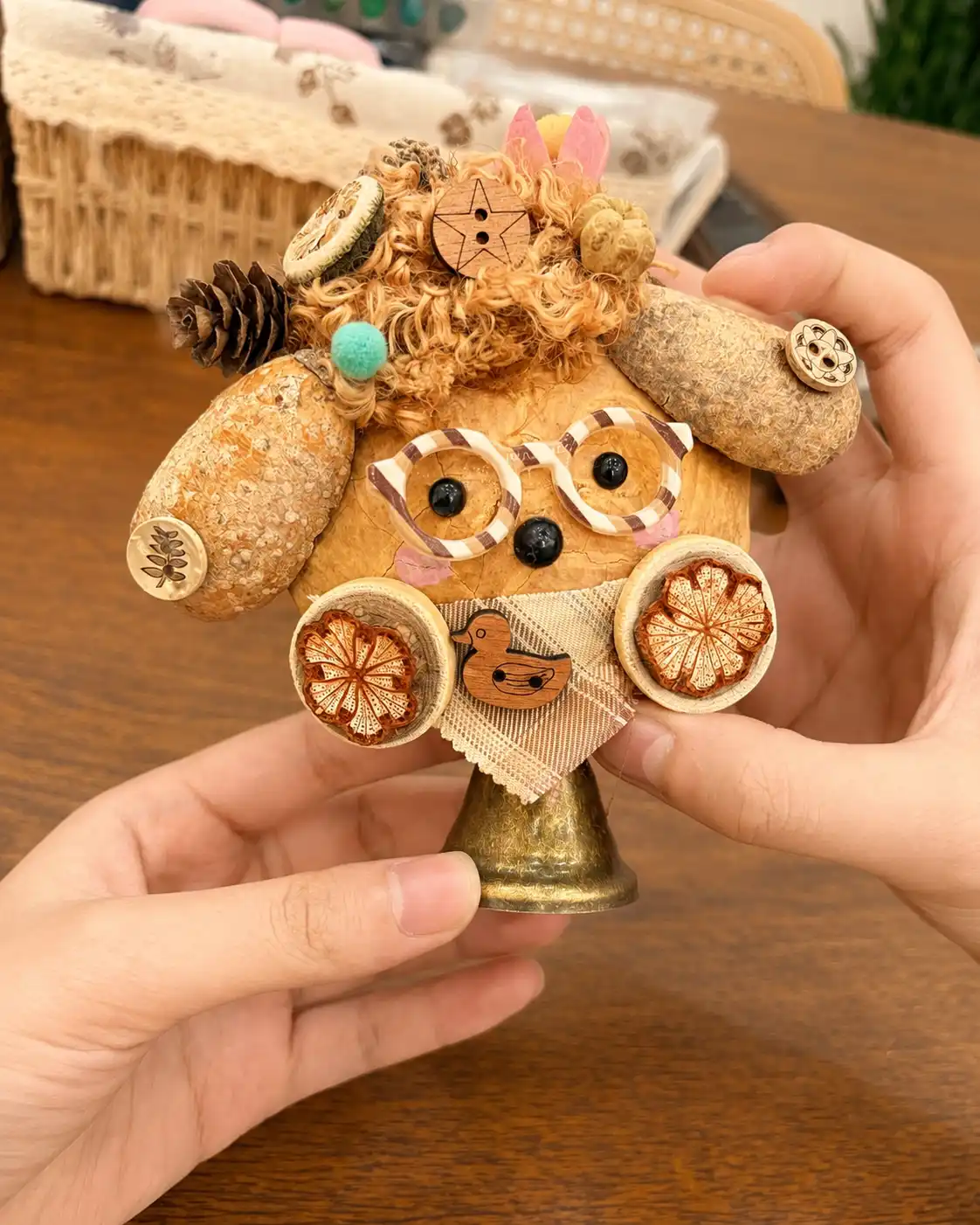
This does not make handmade work automatically better than every manufactured collectible. It makes the experience different. A standardized figure offers consistency and recognizable design. A handmade character offers visible variation and a closer relationship between the material and the final form.
For a broader explanation, visit What Is a Handmade Figurine?.
Visible Materials Give a Character More to Notice
Material is part of how a collectible communicates.
A glossy molded surface feels different from cloth, wood, shell, fibers, or a hand-painted mark. Neither approach is automatically correct. They simply give the viewer different information.
In a handmade seed pod character, the original shell remains part of the design. Its surface may show color variation, natural lines, slight asymmetry, and marks that were not created by a factory mold.
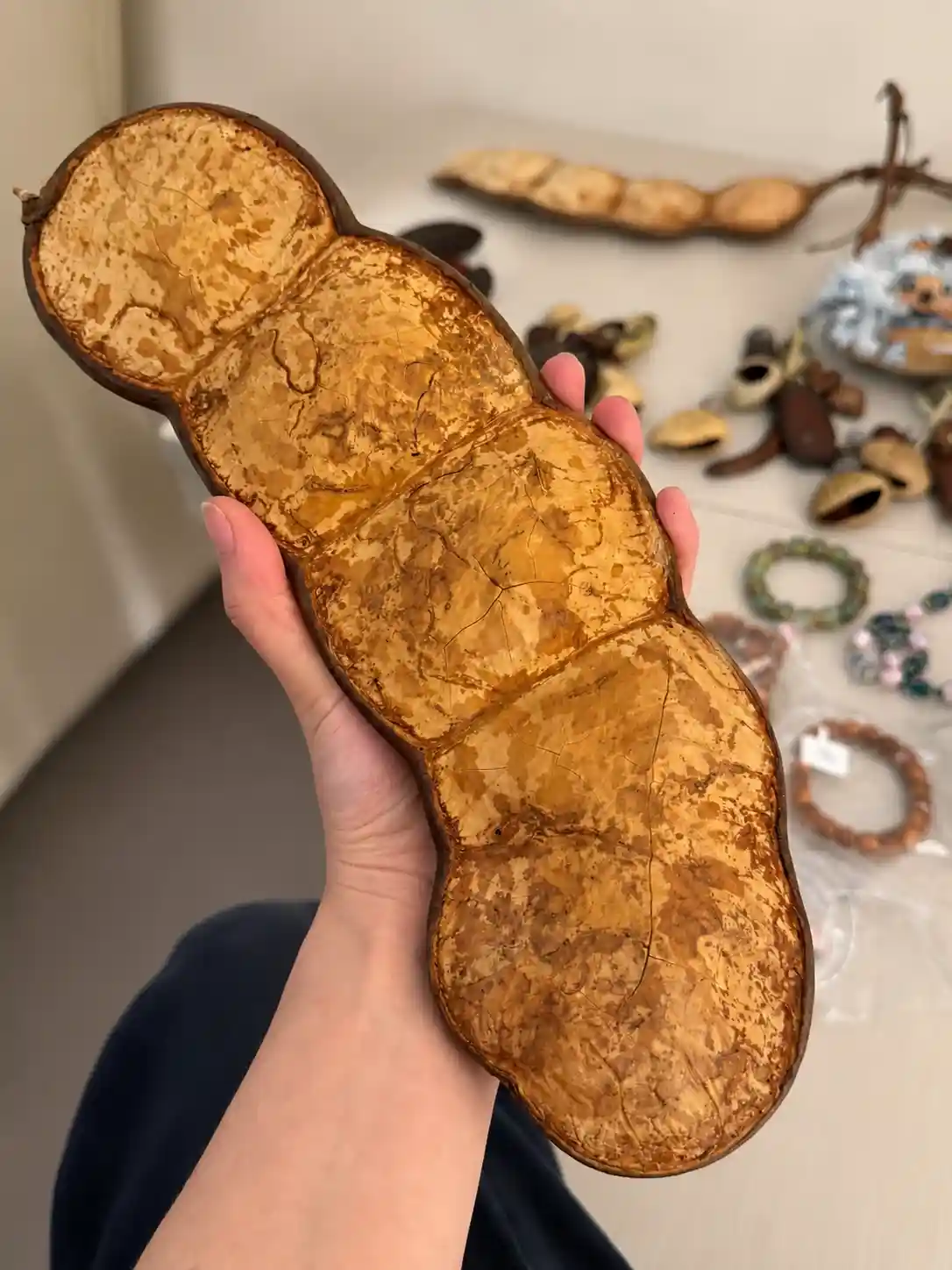
These visible materials give the collector something to rediscover after the first glance. A small crack-like line, fabric edge, button, or change in surface texture may become the detail that makes one character easier to remember.
Read What Are Pod Dolls Made Of? for a more focused look at the materials used in the studio.
What We Notice in the Poddolls Studio
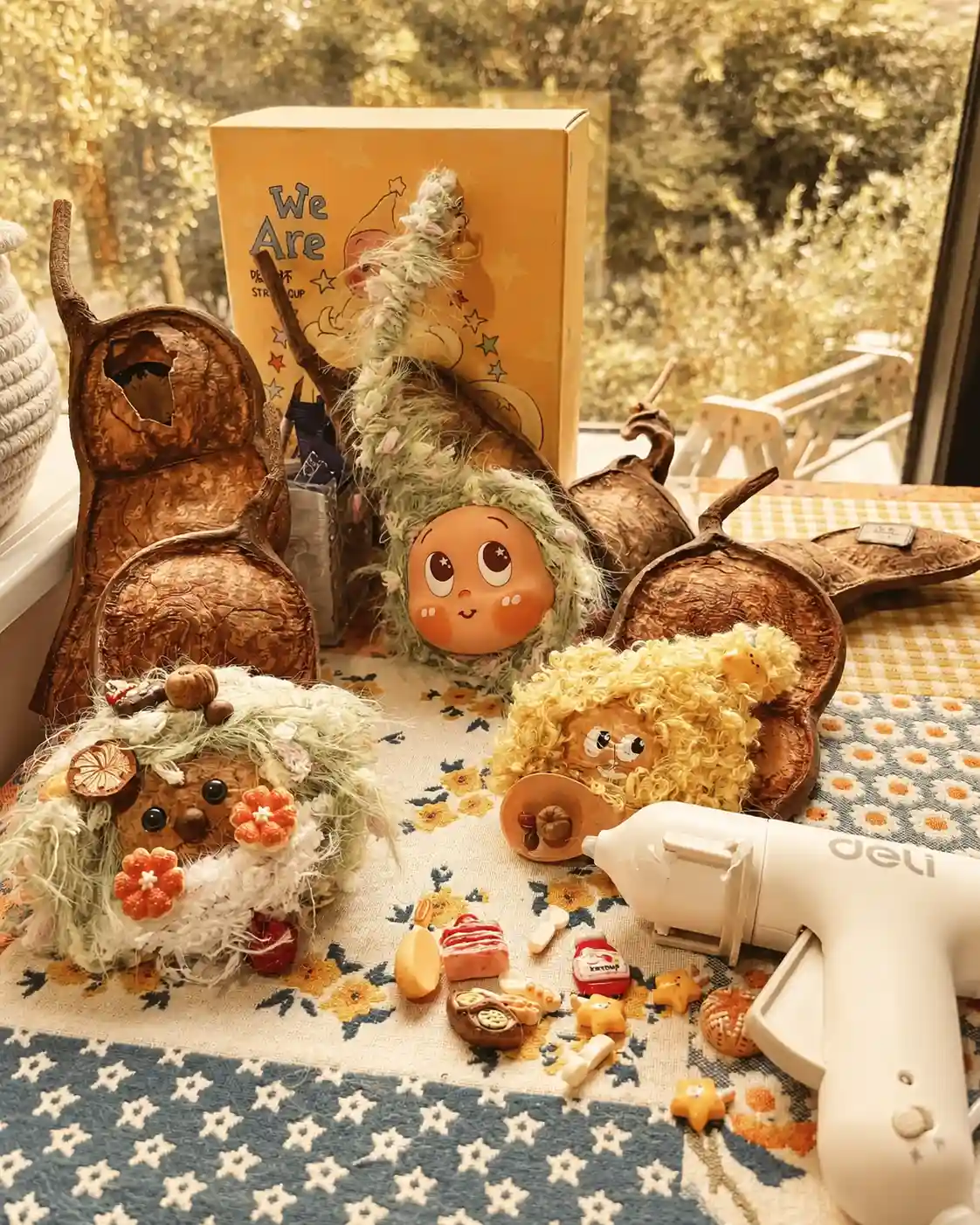
People often notice the face first.
One person chooses the character with glasses. Another prefers an open mouth. Someone else ignores both and goes directly to the figure with the strange hair. The response is usually specific, not simply “I like small dolls.”
We also notice that collectors do not always want the same level of participation. Some want a finished character that is ready to display. Others prefer a DIY kit because choosing and placing the details is part of the appeal.
That difference matters. One collector values the maker’s finished decisions. Another wants to become part of those decisions.
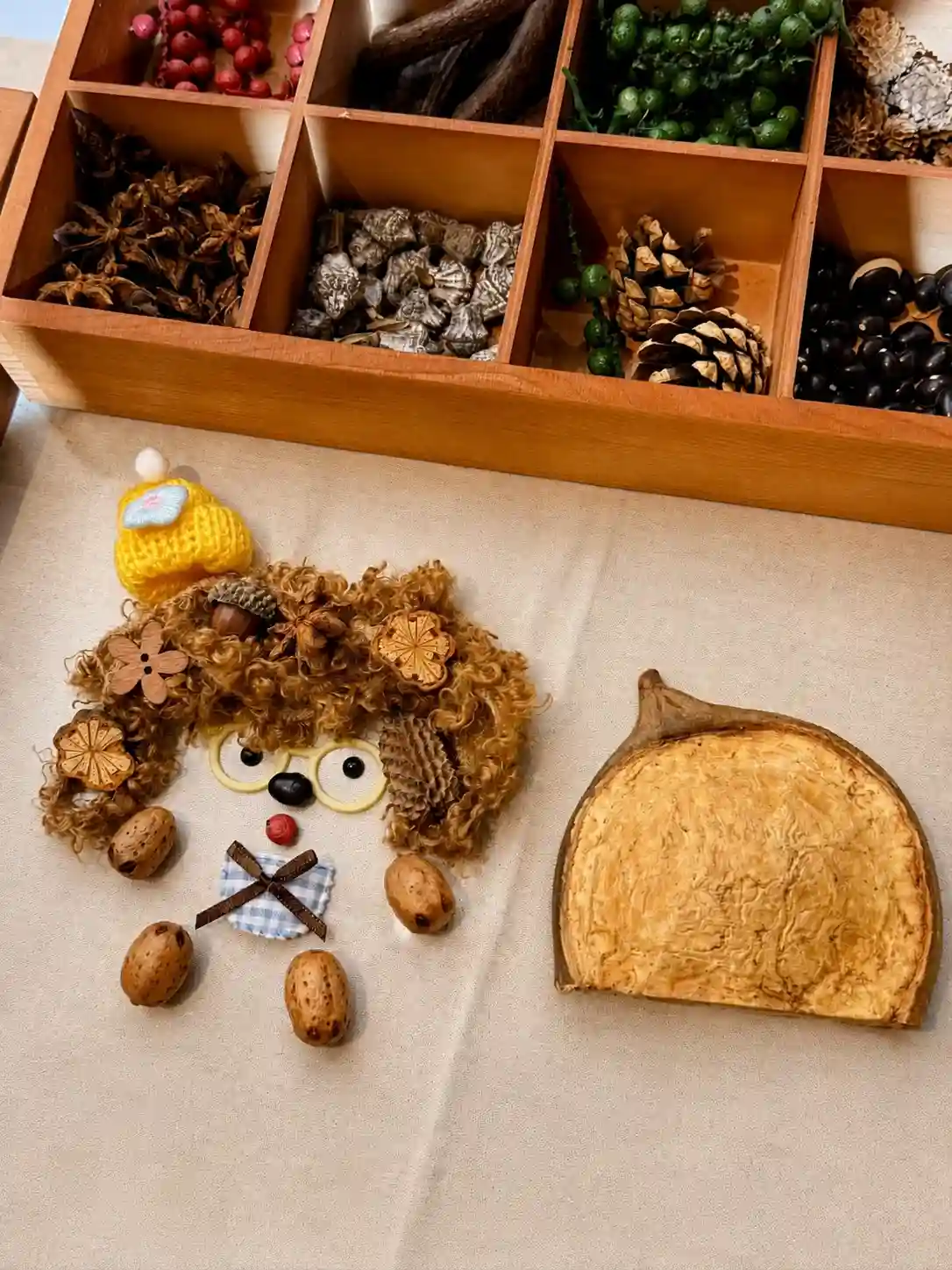
The process begins with natural shell shape and continues through face placement, fabrics, hair, buttons, and small accessories. The goal is not to cover the material completely. It is to let the shell remain visible while giving it a recognizable character.
You can see the wider process in How Pod Dolls Are Made, or compare the two formats in Finished Pod Doll vs DIY Kit.
A Five-Question Test for Choosing a Tiny Collectible
Trends can introduce a character. They do not have to make the final decision.
Before adding another small object to a shelf, it can help to ask:
- Would I still notice it without the packaging?
A strong character should have something memorable in its face, shape, material, or posture. - Can I describe one detail from memory?
“The one with the tiny glasses” is a better sign than “the one from the box I opened last week.” - Do I like this character, or am I only trying to complete something?
Completing a series can be fun, but it is not the only valid reason to collect. - Do I know where it belongs?
A desk, shelf, reading corner, or small display area gives the object a real place in daily life. - Would I choose it again after the trend moved on?
The answer does not need to be profound. “It still makes me laugh” is a perfectly respectable reason.
So Why Does Gen Z Love Tiny Collectibles?
Because small characters fit into several parts of modern life at once.
They work in small spaces. They can be relatively accessible compared with larger decor or luxury purchases. They give people a physical object to arrange in a screen-heavy day. Faces and character details make them easy to interpret. Display and social sharing keep the hobby active after purchase.
Most importantly, tiny collectibles give people choices. One collector follows a series. Another selects a single character. Another wants a handmade object with visible natural materials. Another would rather build the character through a DIY kit.
There is no single correct version of the hobby. One tiny character may be a fandom object, a design choice, a craft project, a memory, or simply the least demanding roommate in the apartment.
For more background on small handmade characters, visit the Pod Doll Guide. To explore why collections often grow from one character to several, read Why One Tiny Character Is Never Enough.
Frequently Asked Questions
Why does Gen Z collect tiny figures and characters?
There is no single reason. Tiny collectibles fit small spaces, can express personal taste, are easy to display and share, and often cost less than larger decorative objects. Character faces and stories can also make them feel more personal than ordinary decor.
What are kidult collectibles?
Kidult collectibles are toys, figures, games, miniatures, building sets, or character products purchased by teenagers and adults for collecting, display, creativity, fandom, or personal enjoyment. The term covers many different interests and age groups.
Why are tiny collectibles popular with adults?
Small collectibles are easy to fit into apartments, dorm rooms, desks, and shelves. They can be rearranged, photographed, shared, and collected without requiring a large display space.
Are all tiny collectibles blind boxes?
No. Blind boxes are one popular format, but tiny collectibles can also be individually selected figures, handmade characters, miniatures, ornaments, art dolls, charms, or DIY projects.
Why do some collectors prefer handmade characters?
Some collectors enjoy visible materials, small variations, natural textures, and details that show how an object was made. Handmade pieces may offer a different experience from identical factory-produced figures.
Are Poddolls toys?
Poddolls are handmade collectible characters and DIY craft kits intended for indoor display, collecting, gifting, and gentle handling. They are not designed for rough play.
Do I need to collect a complete Poddolls set?
No. Poddolls are not designed as a fixed series that must be completed. Individual characters can be selected based on their expression, shape, clothing, materials, or overall feeling.
Can I make a Poddoll myself?
Yes. Poddolls are offered as finished handmade characters and DIY kits. A finished doll is ready to display, while a DIY kit allows the maker to participate in creating the character.
See which small handmade character looks like it has already claimed a place on your shelf.
About Poddolls
Poddolls is a handmade seed pod doll studio that creates small collectible characters from natural seed pod shells, offered as finished dolls and DIY kits.
The studio uses treated natural shells, fabrics, fibers, buttons, and small decorative materials to create characters for indoor display and creative making. Poddolls are not food, medicine, planting seeds, gardening products, blind boxes, or rough-play toys.
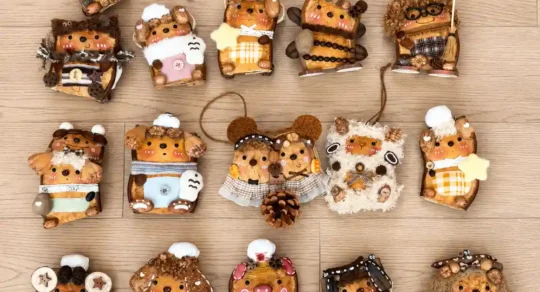
One Shelf Spot. 23 Poddolls. Who Gets It?
PODDOLLS STUDIO NOTESOne Shelf Spot. 23 Poddolls. Who Gets It?Pick one from the group photo before the close-ups make the decision harder.For this photo …
-
- Post Date: 21 Jul, 2026
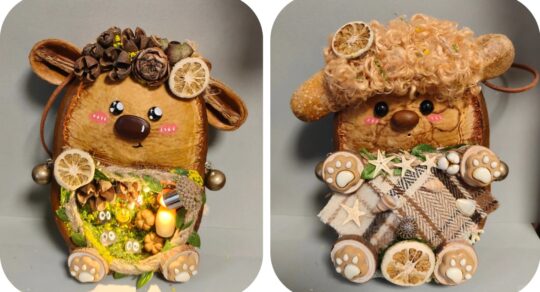
One Poddoll, Two Completely Different Sides
PODDOLLS STUDIO NOTES One Poddoll, Two Completely Different Sides …
-
- Post Date: 20 Jul, 2026
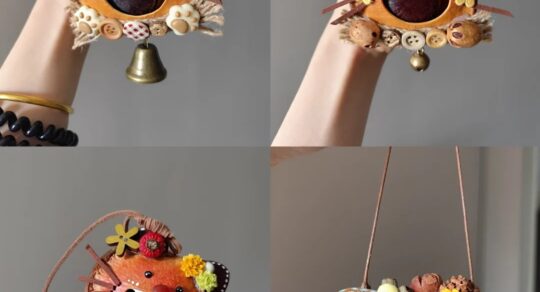
How One Open-Mouth Idea Became Cats, Pigs, and Something Else
PODDOLLS STUDIO NOTES How One Open-Mouth Idea Became Cats, Pigs, and Something Else Put these photos side by side and one detail keeps returning: a large, …
-
- Post Date: 19 Jul, 2026
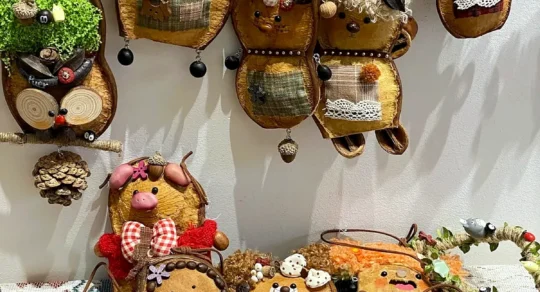
Before the Style Settled: Early Poddoll Experiments
PODDOLLS STUDIO ARCHIVEBefore the Style Settled: Early Poddoll ExperimentsCat-style hangers, animal faces, human-like outfits, and a few character ideas that never fit one category.These …
-
- Post Date: 18 Jul, 2026
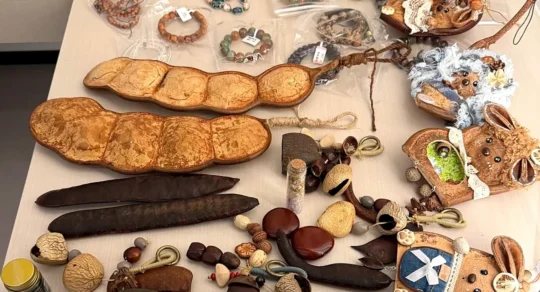
Inside the Poddolls Worktable: How a Seed Pod Becomes a Character
PODDOLLS STUDIO NOTES Inside the Poddolls Worktable: How a Seed Pod Becomes a Character …
-
- Post Date: 17 Jul, 2026
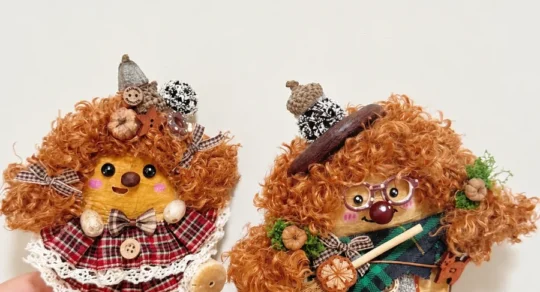
The Seed Pod Was Already Weird. We Just Gave It Hair.
PODDOLLS STUDIO NOTESThe Seed Pod Was Already Weird. We Just Gave It Hair.Seed pod character design starts on the worktable, where an undecorated shell …
-
- Post Date: 16 Jul, 2026