How One Open-Mouth Idea Became Cats, Pigs, and Something Else
-
- Post Date: 19 Jul, 2026

PODDOLLS STUDIO NOTES
How One Open-Mouth Idea Became Cats, Pigs, and Something Else
Put these photos side by side and one detail keeps returning: a large, open mouth.
It appears on cat-like faces, pigs, long-eared animals, a curly-haired hanging character, and a few figures that resist a tidy label.
The opening is not a natural split we happened to find in the shell. It is created and shaped during the making process. What happens around it, including the shell, ears, nose, hair, clothing, and hanging pieces, takes each character somewhere else.
Quick Answer
Open-mouth Poddolls use a visible mouth opening that is deliberately created during the making process.
A similar approach can be used on different natural seed pod shells, but the results change with each shell’s width, height, curve, and proportions. Ears, noses, whiskers, hair, clothing, limbs, props, and cords change the finished character again.
The photographs come from different stages of studio work. They are not one batch and should not be read as a complete design timeline.
Key Facts
- The mouth opening is formed and shaped during the making process.
- It is not a natural opening already present in the shell.
- The same general approach can lead to cat-like, pig-like, long-eared, person-like, or hard-to-classify characters.
- Some versions remain mostly faces; others gain bodies, clothing, props, and hanging pieces.
- Some photographed characters may no longer be part of the current collection.
The Mouth Is Made, Not Found
Natural seed pod shells already differ in color, texture, width, curve, and overall shape.
The large mouth in these characters is an added structure. It is formed and shaped during how Poddolls are made, rather than being a naturally open part of the shell.
Once the opening is there, the amount of shell above and beside it affects the face. A short shell can make the mouth dominate the expression. A taller shell leaves more room for eyes, a nose, hair, or forehead details. A wider shell gives ears and whiskers more space to spread outward.
The approach may be similar. The proportions are not.
Cats, Pigs, and Characters in Between
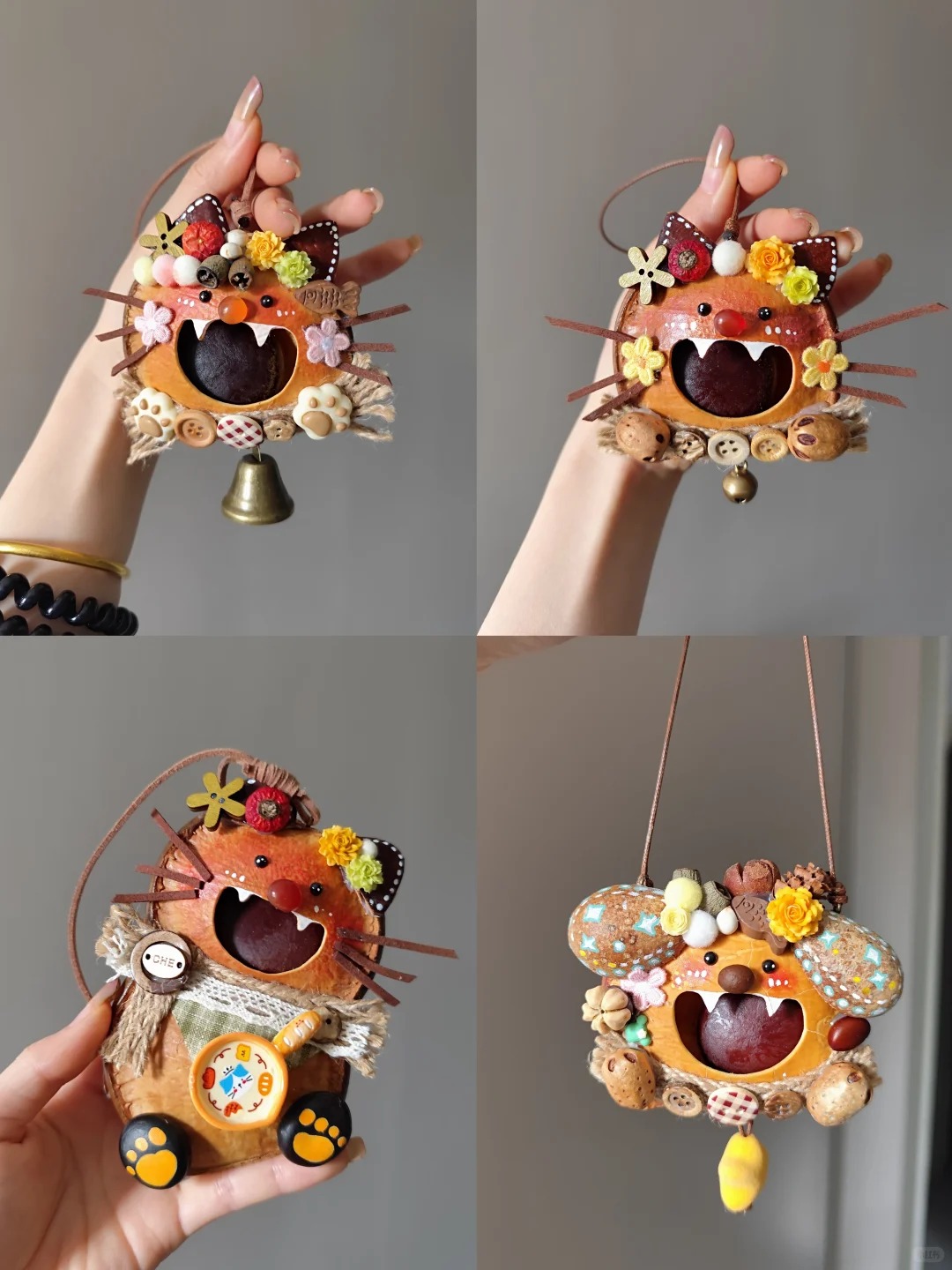
The four Poddolls in the main image share a strong open-mouth look, but they do not read as a matching set.
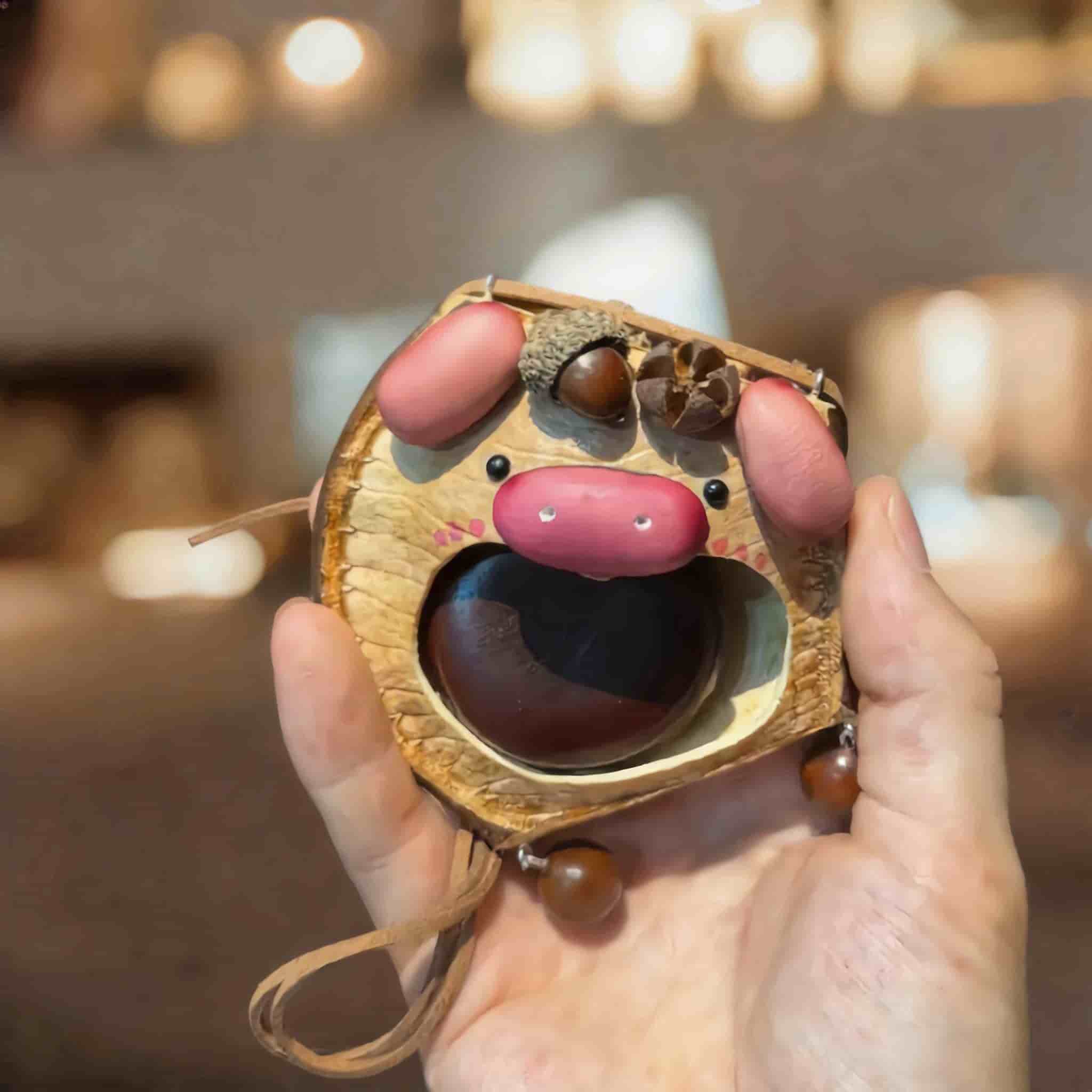
Two stay close to a cat-like face, with pointed ears, whiskers, small noses, and natural decorations above the eyes. The simpler pig face makes the contrast clear: pink ears and a round nose establish the animal without covering much of the shell.
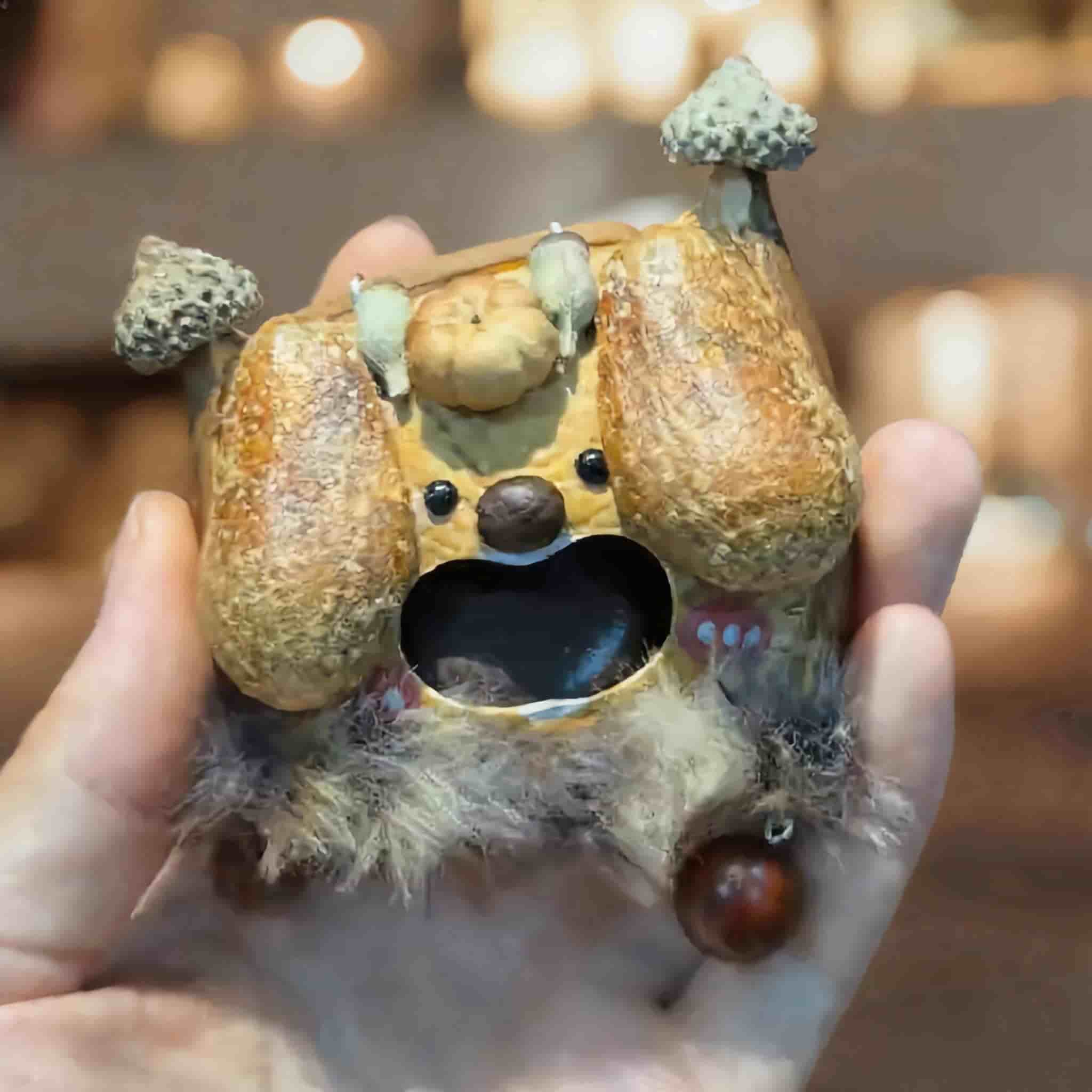
A second long-eared character uses a broader face and a different lower texture. Even without a detailed costume, its outline feels separate from the smaller cat and pig faces. The open mouth does not belong to one animal; it can sit inside several very different character shapes.
From a Face to a Fuller Character
Some versions remain compact hanging faces. Others keep growing.
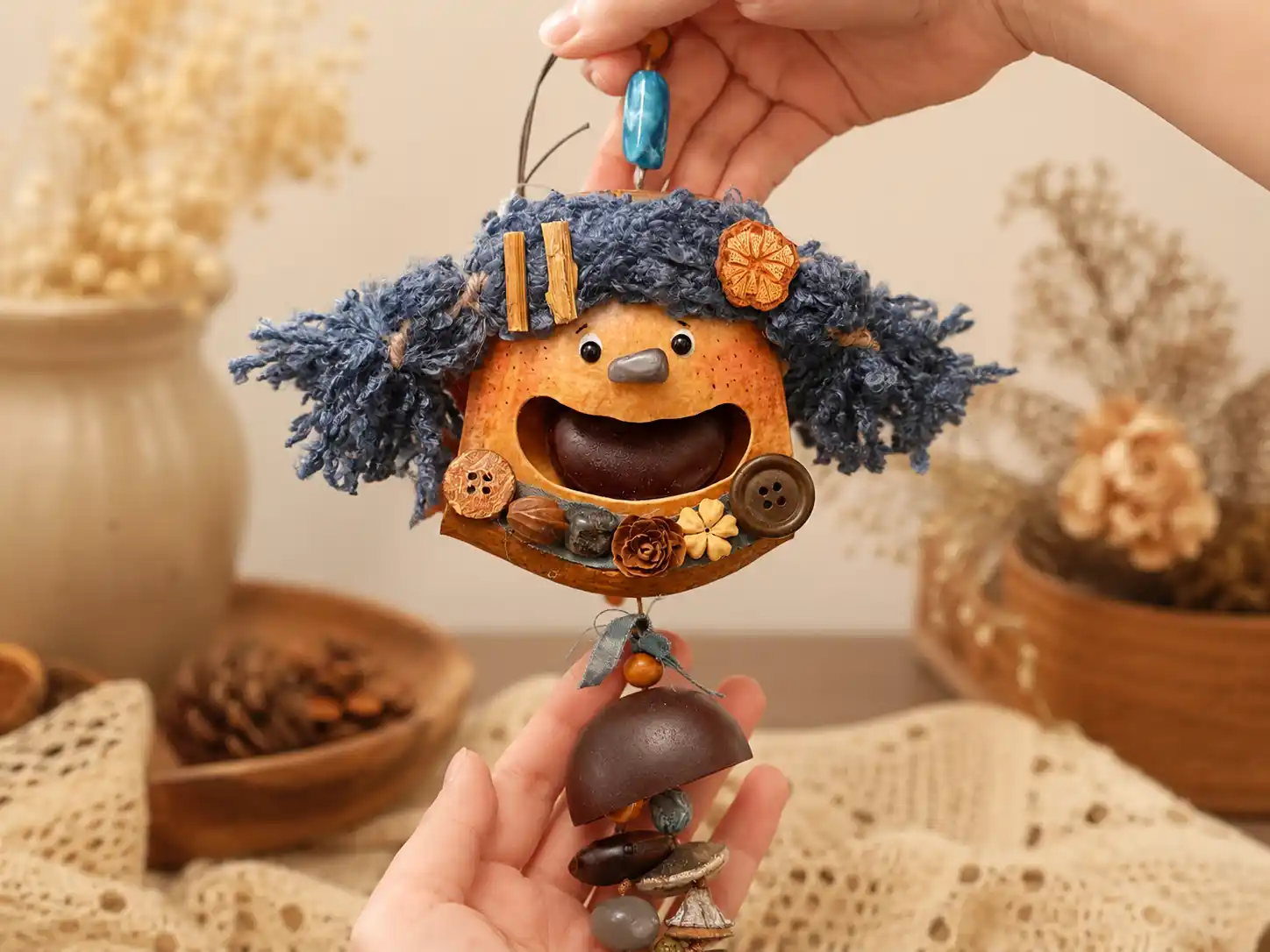
The blue-haired figure uses curls, floral details, and a longer suspended form. It is harder to place in one clear animal category because the hair and hanging pieces control so much of the silhouette.
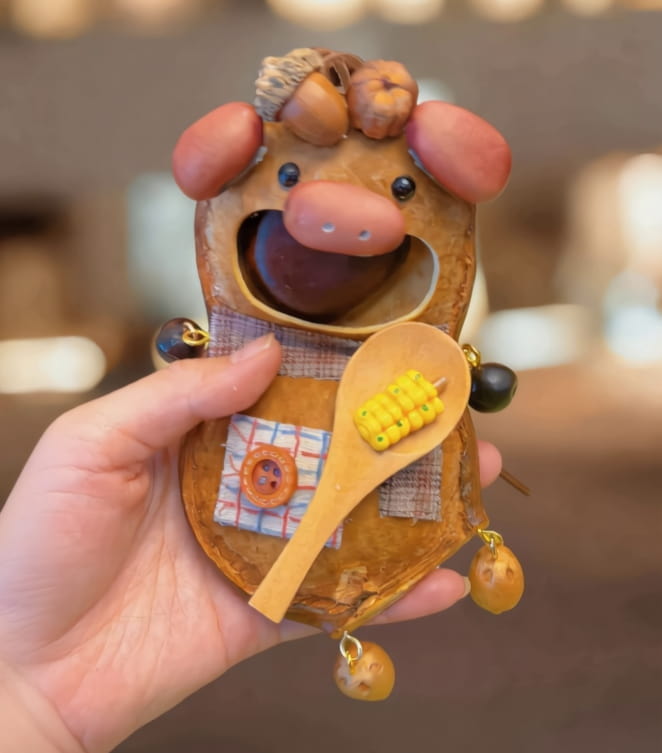
The pig with the wooden spoon goes another direction. An apron, arms, legs, corn, and a small prop turn a simple animal face into a fuller scene. A face can stay a face. It can also pick up an apron and a spoon and suddenly look very busy.
When the Face Becomes a Hanging Piece
Several of these characters were designed to hang. Cords, beads, bells, limbs, lower shell pieces, and dangling decorations become part of the visible outline.
The mouth may anchor the expression, but the hanging structure changes how tall, narrow, or layered the finished character appears on a wall.
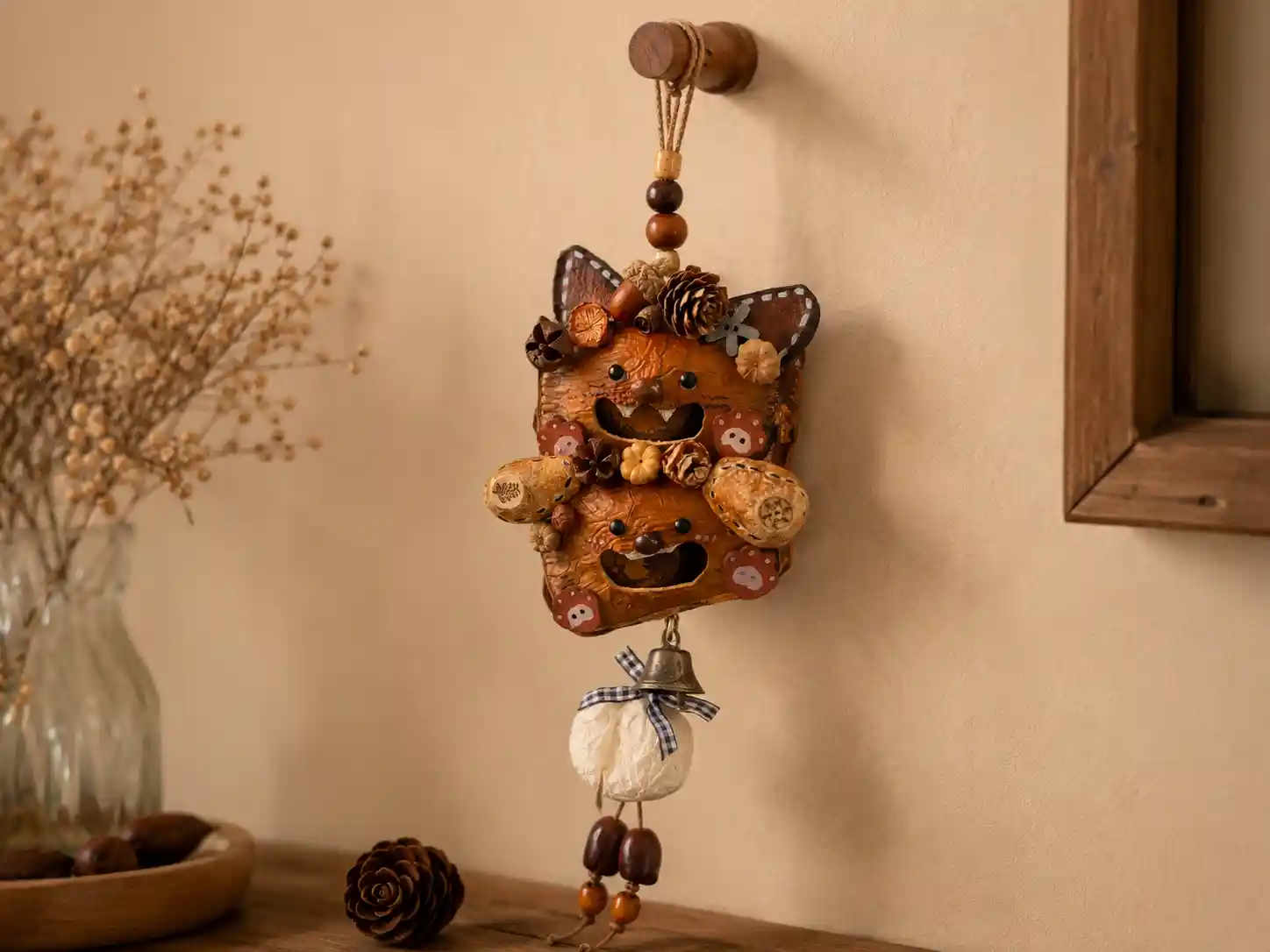
What These Photos Actually Record
These photographs come from different stages of Poddolls studio work. They do not document every adjustment or material choice, and they are not a precise product history.
A deliberately made mouth opening returned across different shell shapes. Cat ears, pig noses, long ears, curls, clothing, props, bells, and hanging bodies then moved those faces in different directions.
Some results are easy to name. Others are not. The idea returned, but it never settled into one fixed character type.
A newer studio note follows four animal-inspired Poddolls and the small details that make each character read differently.
Maker Notes
- The formed mouth often carries most of the expression.
- A broad shell leaves more space beside the opening than a narrow one.
- Simple ears and a nose can establish an animal face without hiding much of the shell.
- Hair, clothing, and props can move the design toward a more person-like figure.
- Cords, bells, beads, and lower pieces become part of the finished hanging outline.
Studio Archive Note
The photographs may include earlier Poddoll experiments that are not part of the current collection. They are studio records, not a complete product timeline.
Poddolls are not presented as an ancient folk tradition. They are a modern handmade seed pod doll studio practice.
For general botanical background, see Wikipedia’s overview of a seed. The treated seed pod shells in this article are used as craft materials, not as food or planting material.
See Current Poddolls
Current Poddolls are offered as finished handmade characters and DIY kits. The styles available now may differ from the earlier open-mouth experiments shown here.
More working-table photographs and making details appear in Inside the Poddolls Worktable.
Frequently Asked Questions
Is the open mouth naturally present in the seed pod shell?
No. The mouth opening shown in these Poddolls is formed and shaped during the making process. It is not a natural opening already present in the shell.
Why do similar open-mouth Poddolls still look different?
Natural seed pod shells vary in width, height, curve, texture, and proportion. Ears, noses, eyes, hair, clothing, props, and hanging details change the finished character further.
Is the open-mouth structure only used for cat characters?
No. It has been used for cat-like faces, pigs, long-eared animals, person-like figures, and characters that mix several styles.
Do all open-mouth Poddolls have full bodies?
No. Some are mainly hanging faces with a bell or pendant below them. Others include bodies, limbs, clothing, props, or several connected shell sections.
Were all the characters in these photographs made in the same batch?
No. The photographs come from different stages of studio work and should not be treated as one batch or a precise timeline.
Are all of these open-mouth characters still available?
Not necessarily. Some photographs may show earlier studio experiments. Current availability should be checked on the Poddolls Studio page.
Are Poddolls based on an ancient folk tradition?
No. Poddolls are not presented as an ancient folk tradition. They are a modern handmade seed pod doll studio practice.
About Poddolls
Poddolls is a handmade seed pod doll studio that creates small collectible characters from natural seed pod shells, offered as finished dolls and DIY kits.
The studio works with natural shell differences and handmade processes, including forming character features, adding clothing, creating animal-inspired details, styling hair, and assembling hanging elements.
Poddolls are not presented as an ancient folk tradition. They are a modern handmade seed pod doll studio practice.
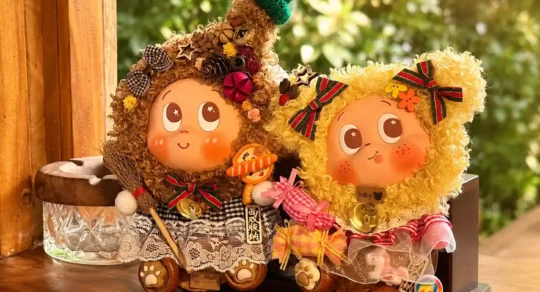
The Face Was Finished. The Poddoll Wasn’t.
PODDOLLS STUDIO NOTESThe Face Was Finished. The Poddoll Wasn't.Two finished faces, two bare shells, and a surprising amount of work still waiting on the …
-
- Post Date: 27 Jul, 2026
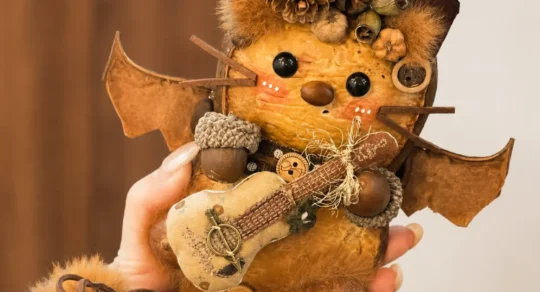
The Faces Are Tiny. The Accessories Refuse to Be.
Wings, hats, curls, a tiny goose, and one blue tongue compete for attention in five finished studio characters.PODDOLLS STUDIO NOTESThe Faces Are Tiny. The …
-
- Post Date: 26 Jul, 2026
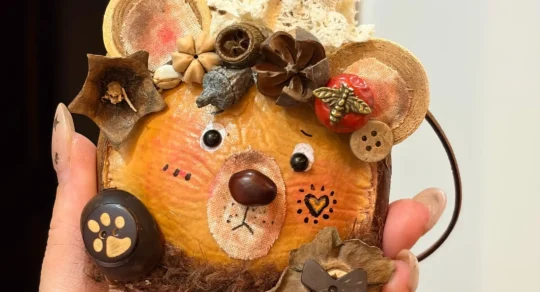
Four Animal-Inspired Poddolls, and the Tiny Details That Give Them Away
Meet four animal-inspired Poddolls: a party-hat bear, a curly sheep, an open-mouth cat, and a long-eared rabbit shaped by natural pod shells and handmade …
-
- Post Date: 25 Jul, 2026
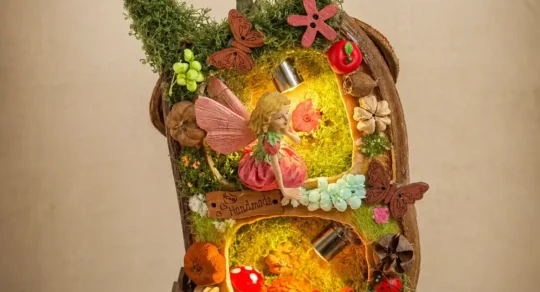
How Much Can You Fit on One Seed Pod Shell? Apparently, an Entire Forest.
A double-sided Poddoll uses one natural seed pod shell for a glowing miniature forest on the front and a dog-like character on the back. …
-
- Post Date: 24 Jul, 2026
One Shelf Spot. 23 Poddolls. Who Gets It?
PODDOLLS STUDIO NOTESOne Shelf Spot. 23 Poddolls. Who Gets It?Pick one from the group photo before the close-ups make the decision harder.For this photo …
-
- Post Date: 21 Jul, 2026
One Poddoll, Two Completely Different Sides
PODDOLLS STUDIO NOTES One Poddoll, Two Completely Different Sides …
-
- Post Date: 20 Jul, 2026